Myopia control refers to strategies aimed at slowing the rate of short-sightedness progression in children. Myopia occurs when the eye grows longer than normal or the cornea curves too steeply, causing distant objects to appear blurry. In many children, myopia increases gradually as the eye continues to grow. Myopia control does not reverse refractive error but focuses on influencing the factors that may contribute to faster progression. Approaches may include specialised lenses, eye drops, lifestyle adjustments, and regular monitoring. Early evaluation helps identify children who may benefit from interventions, particularly those with a strong family history or rapid changes in spectacle power.

Myopia in childhood can be influenced by both environmental and genetic factors. Children with parents who have myopia have a higher likelihood of developing it, and lifestyle patterns — such as limited outdoor activity or extended near-work — may also contribute.
As myopia progresses, children may experience increasing difficulty seeing distant objects clearly, requiring frequent updates in spectacle power. Higher levels of myopia may also be associated with structural changes in the eye that require monitoring over time. Identifying progression early allows timely guidance and assessment of suitable management options.
Mild difficulty seeing distant objects
Increasing reliance on spectacles for board work or outdoor tasks
Rapid rise in spectacle power over a short period
Significant refractive error requiring closer observation
Stabilisation or slower change, depending on individual factors
Symptoms may vary depending on the child’s degree of short-sightedness and visual habits. Some children may not report symptoms, making routine school-age screenings and eye examinations helpful.

Lifestyle guidance is an important part of myopia control, as environmental factors may influence progression.
Certain spectacles are designed to influence how light focuses on the retina, which may help manage progression.
These lenses have specific optical designs that aim to influence peripheral retinal focus.
Low-dose atropine eye drops are sometimes used as part of a myopia management plan. They are monitored and adjusted according to the child’s needs and response.
Assessments help determine how quickly a child’s myopia is changing and whether certain interventions may be suitable. These examinations review refractive error, eye growth patterns, and focusing behaviour.

Every patient’s condition, lifestyle, and goals are unique — and so should their care. We take the time to listen, understand, and evaluate your needs in detail. From there, we develop a tailored treatment plan that delivers the most ideal outcomes.

For most of us, our vision is our most valued sense. Whether you are a senior, of working age, or the parent of a child who needs help, we will prioritise understanding your case and determining the most suitable treatment to improve or preserve your vision. We welcome complex cases as we care about you, your sight and your future.

We harness the power of ophthalmic technology to deliver precise diagnostics, accurate treatments, and faster recovery times. From imaging systems to minimally invasive surgical tools, our investment in technology allows us to provide safe and effective eye care.
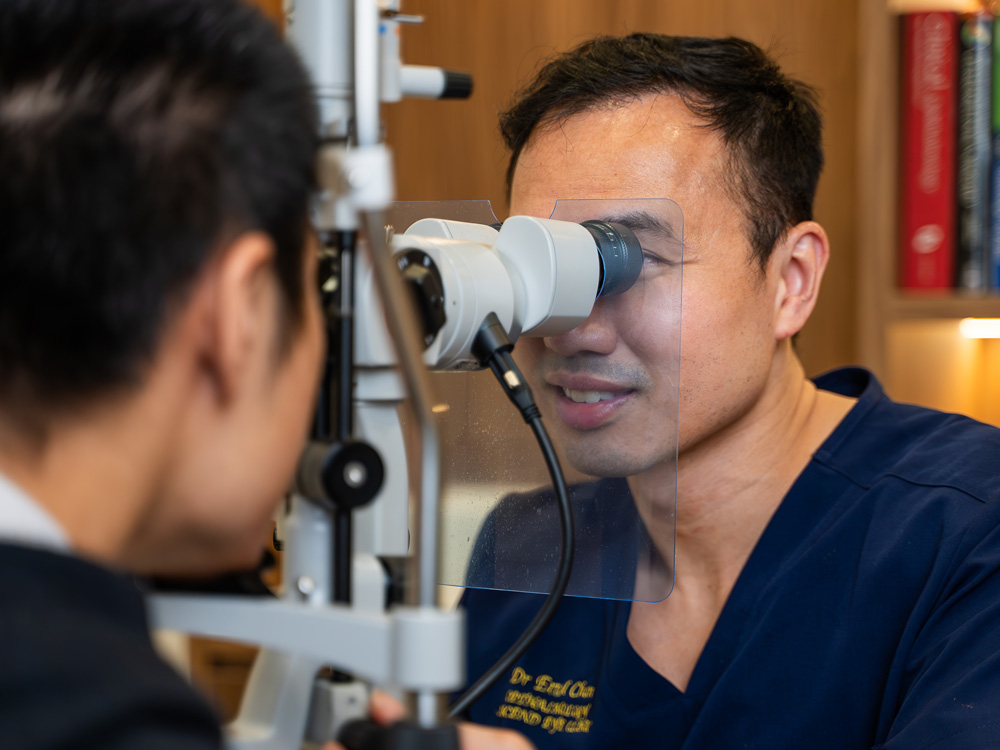
Your safety is our highest priority. Every diagnosis and treatment we provide is evidence-based to ensure that each step of your care is not only effective but also held to a high standard of safety and quality.
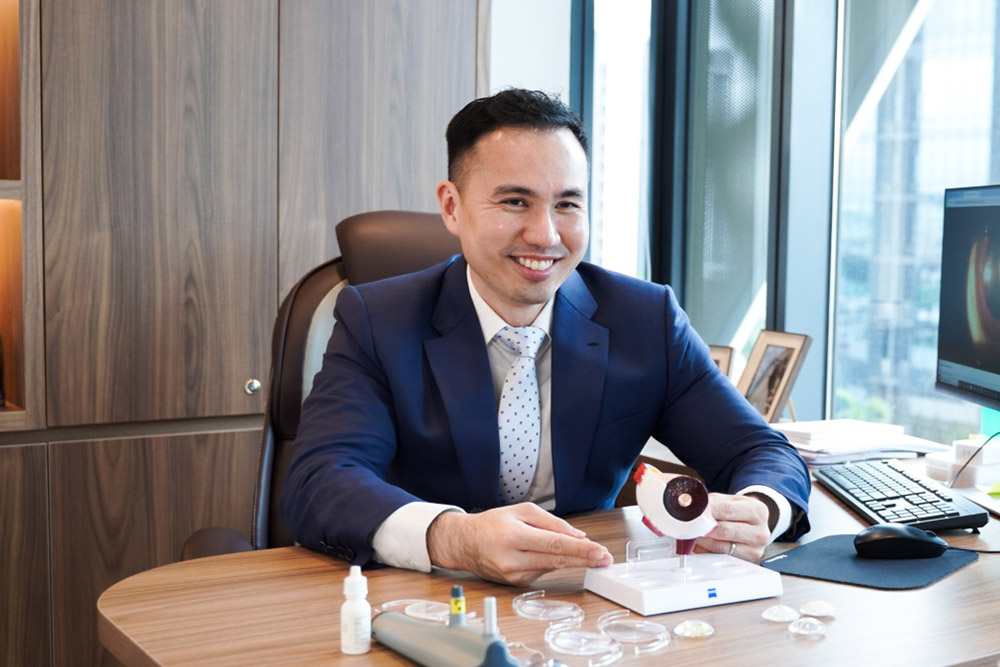
For pre-surgery, we will discuss all possible treatment options and recommends the most appropriate one for every patient. For post-surgery, we provide aftercare, including follow-up consultations and treatment plans tailored to every patient to promote optimal recovery.
Wish to book a consultation or have a question? WhatsApp Us!