
Eye screening refers to a series of assessments performed to review the health of the eyes, evaluate visual function, and identify early signs of eye conditions that may not cause noticeable symptoms. Many eye diseases, such as glaucoma, diabetic retinopathy, macular changes, and cataracts, may develop gradually. Because early changes can be subtle, screening plays an important role in detecting issues at a stage where guidance and follow-up can be planned in a timely manner. Regular screening is recommended for adults, children with visual concerns, and individuals with medical conditions that may affect the eyes. Screening does not treat or cure disease, but it helps ensure that any changes are noticed early so that appropriate steps can be taken.

Eye conditions may progress quietly, and individuals often remain symptom-free until noticeable vision changes occur. Screening helps identify changes in eye pressure, retinal health, refractive error, or other indicators that may suggest the presence of disease. This allows the eye care team to provide advice, follow-up, and management options where needed.
Most eye screening tests are non-invasive, gentle, and designed to keep you comfortable throughout the assessment. The process usually begins with checking your vision by reading letters on a chart, followed by measuring spectacle power. A small, quick puff of air or a light probe may be used to estimate eye pressure. The front of the eye is then examined with a slit-lamp microscope, which uses a bright but harmless light to view the cornea, iris, and lens. For a clearer view of the retina, dilating eye drops may be placed in the eyes; these temporarily blur near vision but do not affect the structure of the eye. Imaging tests such as retinal photography or OCT scanning simply involve looking at a target light while the machine captures images without touching the eye. Throughout the screening, the steps are explained so you know what to expect, and you can pause at any time if you need a break.
Several factors may increase the likelihood of developing eye conditions that benefit from regular screening.
Delaying screening may result in eye conditions going unnoticed until symptoms appear. At that stage, structural changes may already be present. Screening helps support early identification, allowing appropriate review and guidance.
No symptoms, but screening can detect subtle issues
Mild findings suggesting the need for observation
Regular checks required for ongoing review
Additional testing recommended based on medical or family history
New symptoms prompt targeted examinations
Many people attend screening without symptoms, but certain changes may suggest the need for a review.

These tests review clarity of vision and determine whether spectacles are needed.
Measures eye pressure and reviews optic nerve health, as glaucoma often has no early symptoms.
Reviews the surface and front structures of the eye.
Examines the back of the eye for changes related to retinal or nerve health.

Every patient’s condition, lifestyle, and goals are unique — and so should their care. We take the time to listen, understand, and evaluate your needs in detail. From there, we develop a tailored treatment plan that delivers the most ideal outcomes.

For most of us, our vision is our most valued sense. Whether you are a senior, of working age, or the parent of a child who needs help, we will prioritise understanding your case and determining the most suitable treatment to improve or preserve your vision. We welcome complex cases as we care about you, your sight and your future.

We harness the power of ophthalmic technology to deliver precise diagnostics, accurate treatments, and faster recovery times. From imaging systems to minimally invasive surgical tools, our investment in technology allows us to provide safe and effective eye care.
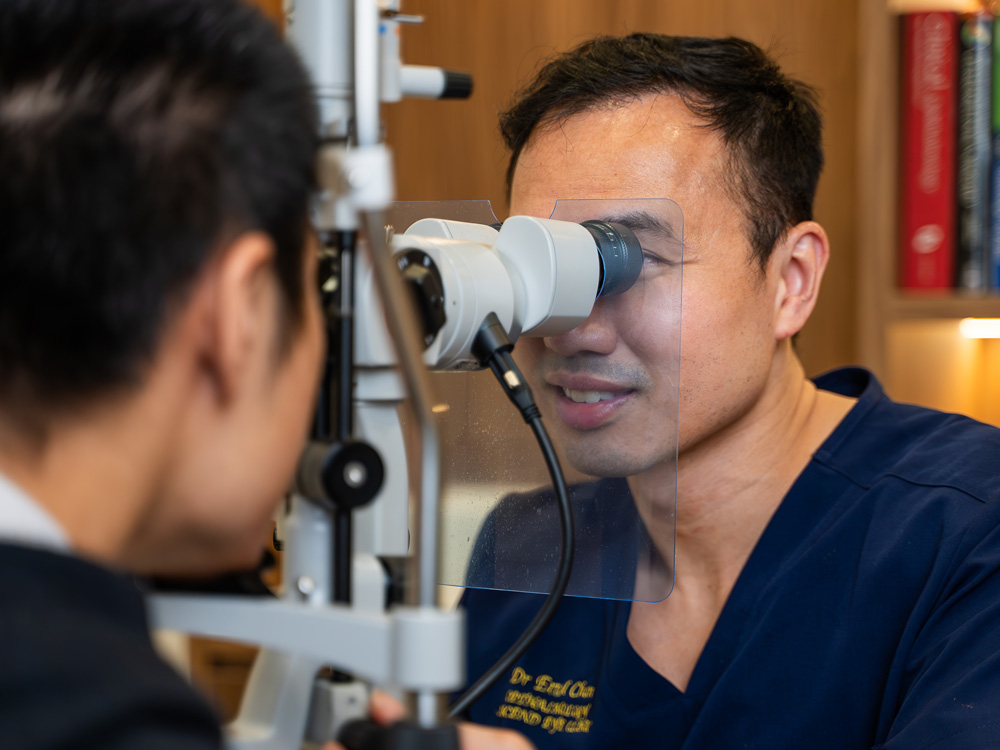
Your safety is our highest priority. Every diagnosis and treatment we provide is evidence-based to ensure that each step of your care is not only effective but also held to a high standard of safety and quality.
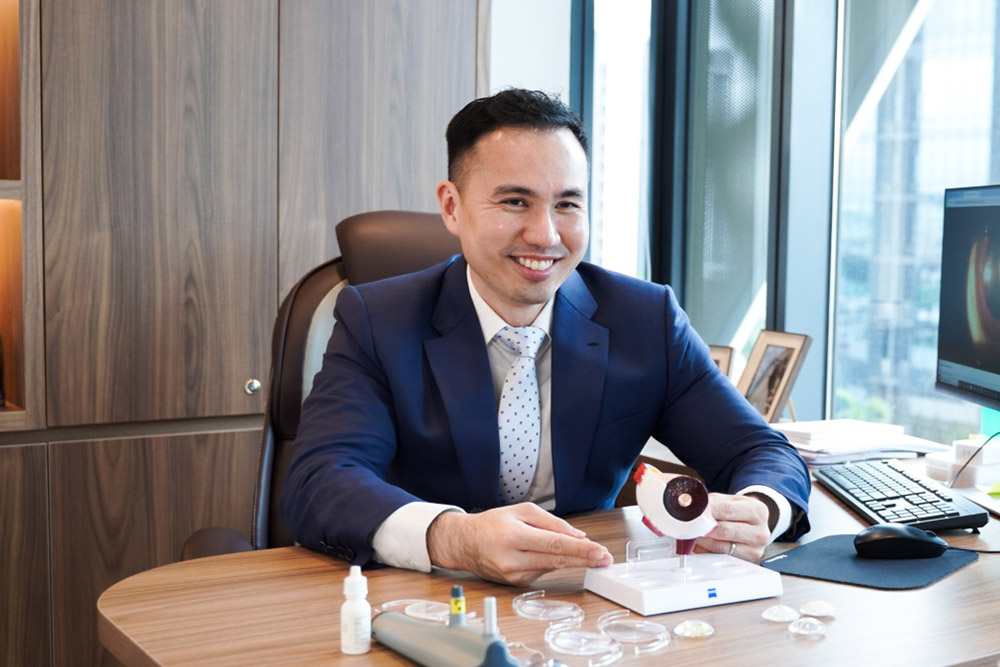
For pre-surgery, we will discuss all possible treatment options and recommends the most appropriate one for every patient. For post-surgery, we provide aftercare, including follow-up consultations and treatment plans tailored to every patient to promote optimal recovery.
Wish to book a consultation or have a question? WhatsApp Us!