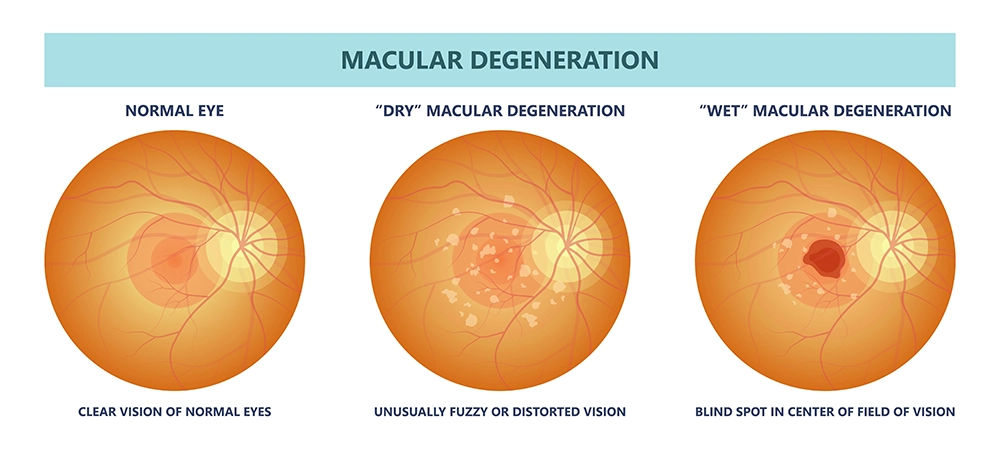

Dry AMD makes up most of all AMD cases, making it the more common type. Dry AMD occurs when the macula gets thinner with age, resulting in tiny protein and lipid deposits to develop under the retina, the area of the eye responsible for detailed visual tasks such as reading and driving.
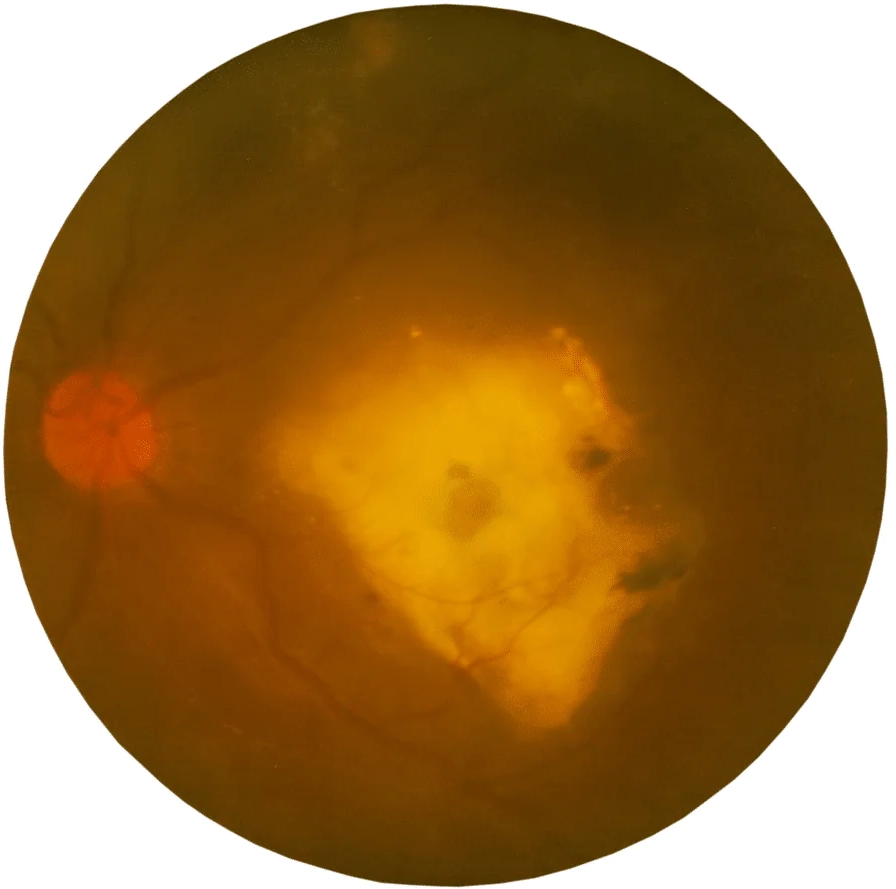
Wet AMD arises from dry AMD. While wet AMD may not be as common as dry AMD, it is more severe as it can lead to rapid vision loss if left untreated. This form occurs when abnormal blood vessels develop underneath the retina at the back of the eye. These new blood vessels are fragile and often leak fluid or blood, causing blurry central vision. In contrast with dry AMD, patients with wet AMD often, but not always, experience sudden and severe vision loss.
Factors that may increase your risk of macular degeneration include:
AMD develops as part of the natural aging process but may be related to UV light exposure over lifetime. Frequent eye exams are crucial to screen for and monitor the progression of AMD.
It’s important to have routine eye exams to identify early signs of macular degeneration.
Manage all medical conditions. For example, if you have cardiovascular disease or high blood pressure, take your medicine and follow your health care provider’s instructions for controlling the condition.

Intravitreal injections of anti-VEGF medications are injected into the eye to block certain growth factors that cause abnormal blood vessels to leak in wet AMD.
Photodynamic therapy “Cold laser” with verteporfin: erteporfin is a medication that is essential for the procedure and is injected into a vein in the arm prior to the procedure. During the procedure, the eye is numbed, and a contact lens is placed over the eye to focus the laser. Then, laser energy is transmitted to the affected region. Laser energy stimulates the verteporfin drug within the abnormal blood vessels, closes them, and cause them to stop growing. The procedure itself does not damage the retina.
Argon Laser Photocoagulation “Hot Laser” During this procedure, the laser is pointed directly at the choroidal neovascularization beneath the retina. As laser light passes through the retinal tissues, it is absorbed by the choroidal neovascularization. This absorption produces heat, which burns the choroidal neovascularization as well as some surrounding retinal tissues.
Our clinic staff will call you within 48 hours to confirm your appointment. For urgent appointments, please call us at 8818 3788.
Wish to book a consultation or have a question? WhatsApp Us!