


Cataracts may be a natural part of aging, but how they are managed can make a meaningful difference to your visual quality and the quality of your daily life.
At Ascend Eye Clinic, we see cataract surgery as an opportunity to give you great vision, without glasses, through the use of artificial lenses and laser technologies. We aim to restore the clarity of vision that will allow you to enjoy your day-to-day activities.
Our philosophy for every patient centres on meticulous attention to detail, bespoke planning, safety, leveraging on forefront technology, discretion, and personalised care — helping you achieve a sharper, more vibrant vision to support your desired lifestyle and expectations.
Your vision need not blur as you age.
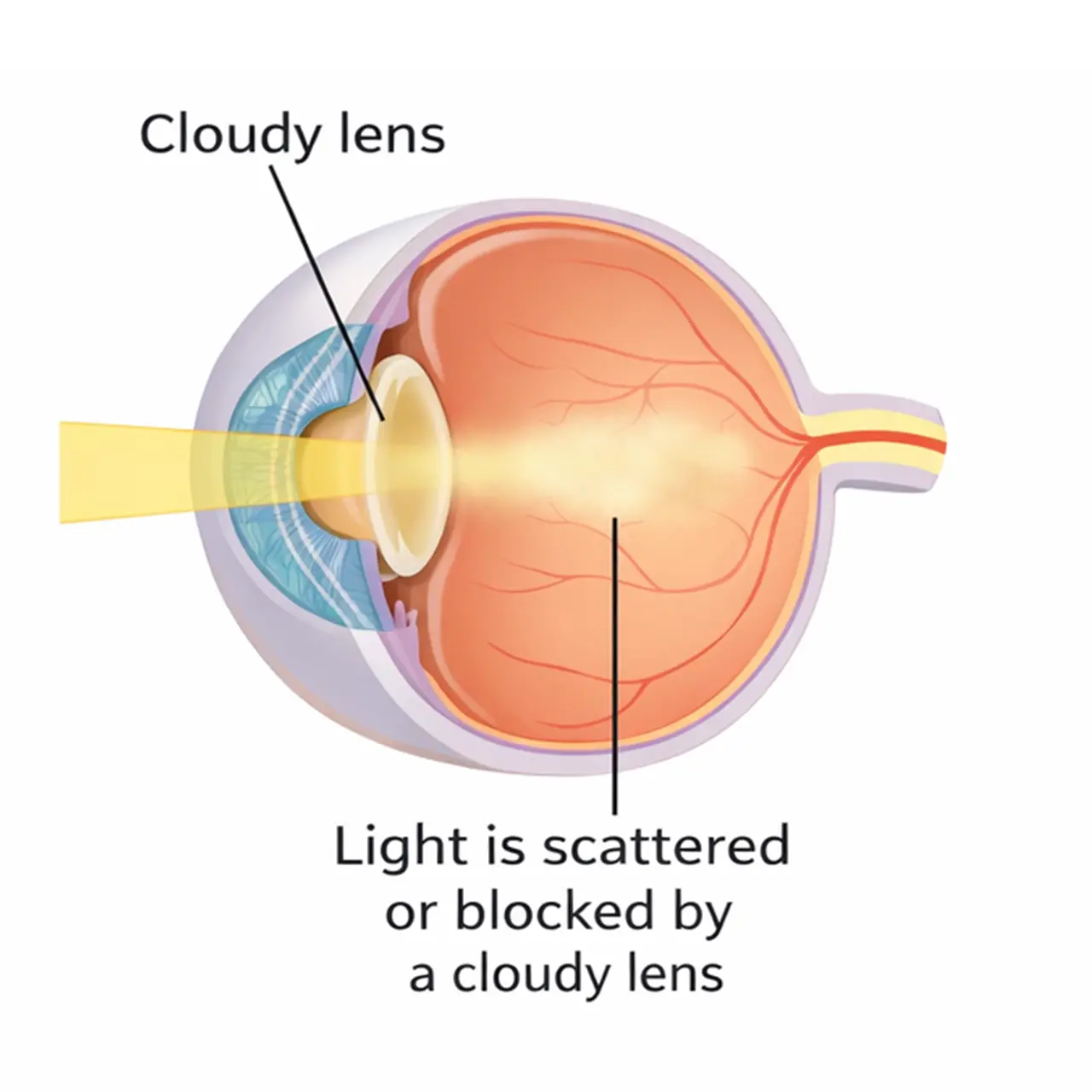
A cataract is a condition in which the natural lens inside the eye becomes less transparent over time. The lens sits behind the pupil and, together with the cornea, focuses light onto the retina, allowing the brain to form clear images. For vision to remain sharp, the lens must stay clear so that light can pass through it easily.
The lens is made up of specialised cells arranged in a highly organised structure. As we age, the lens gradually becomes denser and less flexible. These changes can affect how light travels through the eye. Instead of passing cleanly through the lens, light becomes scattered, which can reduce visual clarity and contrast.
Cataracts typically develop gradually and may affect one or both eyes. Early changes may be subtle and may not cause noticeable symptoms. Over time, individuals will start to notice increasing difficulty with tasks such as reading, driving at night, or seeing clearly in bright lighting. Glare from lights and reduced contrast are also common visual changes associated with cataracts.
Different parts of the lens can be affected, and the location of lens changes may influence how vision is affected. Regular eye examinations allow cataracts to be detected and monitored as soon as they develop.
Several factors may increase the likelihood of developing cataracts. These can generally be grouped into medical conditions, genetic factors and environmental influences. Often, cataract formation results from a combination of these influences over time.

Certain health conditions and treatments may also increase the likelihood of cataract formation. These include:
Systemic health plays an important role in maintaining lens clarity, and managing underlying medical conditions may help reduce additional risk.

Family history can influence cataract risk. Individuals with close relatives who developed cataracts may be at higher risk of experiencing similar lens changes. Certain genetic variations are associated with cataracts present at birth, otherwise known as congenital cataracts.
For age-related cataracts, inherited traits may affect how the lens responds to environmental and metabolic stress over time. While genetic factors cannot be modified, knowing one’s family history can help guide regular eye examinations and monitoring.

Environmental risk factors relate to exposures in daily life that may affect overall health, including the health of the eye’s natural lens. Some environmental elements are associated with increased oxidative stress in the body. Oxidative stress occurs when unstable molecules, often referred to as free radicals, accumulate and affect normal cell function. Over time, this process contributes to changes in the lens that reduce its clarity.
Examples of environmental risk factors include:
Reducing exposure to these factors, where possible, may support overall eye health. Ongoing research continues to examine how lifestyle and environmental modifications influence cataract development.


Simulation between normal vision and vision with Cataract
When one develops cataracts, vision can be affected in one or more ways:
Cataracts progress gradually with time, with an increase in the visual symptoms from early to later stages.

Mild lens clouding with minimal symptoms.

Moderate lens clouding causes increasing visual blur and glare.

More significant clouding affects daily activities.
There are different forms of cataract, depending on which location in the lens is affected. These forms are not mutually exclusive, and most eyes contain a combination of more than one form of cataract.
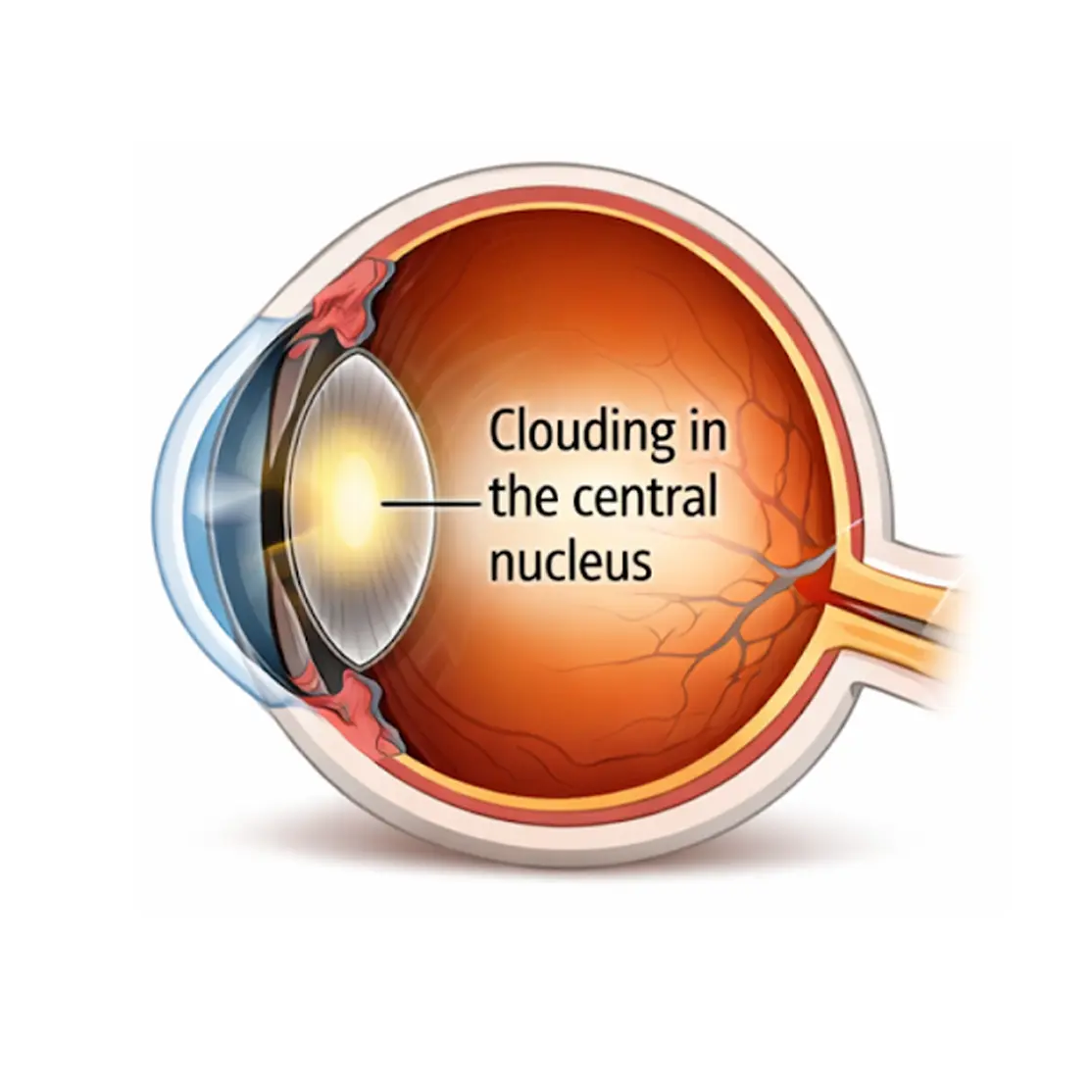
Develops in the central part of the lens and is often associated with aging.

Affects the outer part of the lens and may cause glare or light sensitivity.

Develops in the central part of the lens and is often associated with aging.
Cataract formation is most commonly associated with natural aging changes in the eye, and while it cannot be completely prevented, you can delay its onset and reduce its risk. Certain lifestyle measures support overall eye health and potentially reduce modifiable risk factors linked to earlier or faster lens changes.
UV exposure has been associated with lens ageing. Wearing sunglasses that block UV-A and UV-B rays when outdoors may help reduce cumulative UV exposure over time. A wide-brimmed hat can provide additional protection in bright sunlight.
Smoking has been linked to increased oxidative stress within the body, including the eye. Avoiding or stopping smoking may reduce this source of lens stress. Limiting excessive alcohol intake may also support overall health.
Systemic health plays an important role in eye health. Individuals with diabetes are encouraged to maintain stable blood sugar levels, as persistently elevated glucose may influence lens clarity. Managing blood pressure and cholesterol levels supports vascular health, which is relevant to long-term ocular wellbeing.
A balanced diet containing fruits and vegetables helps maintain general health. A diet rich in antioxidants improves eye health.
Regular comprehensive eye examinations are important, particularly as individuals age. Early detection allows monitoring of lens changes and timely advice regarding visual needs. While cataracts are a common age-related condition, maintaining healthy lifestyle habits and protecting the eyes from excessive environmental exposure may support long-term ocular health.
A clinical evaluation by an ophthalmologist involves examining the clarity of the lens and assessing its impact on vision, as well as other eye structures.

Other tests may be required, depending on specific medical requirements. Some of these include:


Cataracts often develop slowly, and many people adjust gradually to changes in their vision without realising how much clarity has declined. If you find yourself needing brighter light to read, experiencing glare from headlights, struggling with night driving, or noticing colours appear duller than before, these may be signs that cataracts are affecting your daily life.
The first step that the individual should undertake is to attend a comprehensive eye assessment by an ophthalmologist. This allows you to evaluate how much the cataract is contributing to your visual symptoms and to determine if there are any other eye disorders that may be present, even though there may not be outward symptoms. This visit is very important as it enables you to understand your eye status to make an informed decision about your cataract and eye health.
Because cataracts are progressive, early assessment provides clarity and reassurance. Even if surgery is not required now, understanding your current eye and cataract status will help you plan ahead confidently.

There is no fixed threshold at which cataract surgery becomes “necessary”. The decision is not dictated by a single number, but by how your vision is serving you — or holding you back.
In private specialist care, cataract surgery should be approached thoughtfully and individually. During your consultation, we conduct a comprehensive evaluation of your cataract, retinal and optic nerve health, corneal measurements, and overall visual function. Equally important is understanding your lifestyle — whether you drive frequently, work on digital screens, travel often, or value independence in daily tasks, and your priorities when it comes to your vision and spectacle usage.
Here’s why leaving your cataracts until they are “ripe” before deciding on surgery may not be the best course of action:

Many patients assume they should wait until vision becomes severely impaired. However, addressing cataracts at an appropriate stage — before they become very dense — allows for more refined surgical planning and a smoother recovery process. Advanced cataracts require more energy utilisation during surgery, and are technically more demanding, increasing the risks of what would otherwise be a straightforward surgical procedure. A more predictable surgical procedure allows more certainty in the final refractive result of the surgery, which is important for patients to achieve the desired outcome of not having to use glasses after surgery.

Another issue with cataracts concerns the thickness of the cataract as it develops. With time, cataracts become thicker, and in eyes which have a naturally smaller fluid drainage channel, this causes increasing narrowing of this pathway, a process known as angle closure. This will cause a gradual obstruction of this fluid outlet, leading to a sustained increase in eye pressure. This process is insidious and does not have symptoms in its progressive stages. High eye pressures will damage the optic nerve and lead to the development of glaucoma.
Therefore, the question is not simply “Is my vision bad enough?” but rather, “Is my vision meeting the standards I expect for my life, and what are my risks in leaving it for now?”
Some individuals are comfortable adapting to a gradual decline. Others prefer clarity, confidence, and visual precision in their work and daily activities.
The timing of surgery is a collaborative decision. With careful assessment, detailed explanation, and measured guidance, you are empowered to make an informed choice — based not only on the medical status of your eyes, but on your personal expectations for visual quality.
At present, there are no medications, eye drops, supplements, or exercises that can reverse or eliminate a cataract once the lens has become cloudy. In the early stages, updating glasses or improving lighting may help temporarily. However, when vision is significantly affected, cataract surgery is the only established treatment to remove the cloudy lens and restore a clear visual pathway.
Cataract surgery is performed to remove the cloudy natural lens and replace it with a clear artificial lens implant (intraocular lens). The procedure is typically done in the day surgery setting, and patients can return home the very same day.
Conventional cataract surgery is a well-established procedure performed using fine microsurgical instruments. After numbing the eye with anaesthetic drops, the surgeon creates small incisions at the edge of the cornea and creates a circular opening in the lens capsule. The cloudy lens is then broken into smaller pieces using ultrasound energy and gently removed. A clear artificial IOL is then inserted into the remaining lens capsule to restore the eye’s focusing ability. This technique has been practised for many years and remains a commonly performed and effective method of cataract removal.
Femtosecond laser–assisted or bladeless cataract surgery incorporates computer-guided laser technology to perform selected steps of the conventional cataract procedure. Before surgery, detailed imaging of the eye is obtained to map its structures and to guide planning of the precise sites of laser treatment. The laser is used to create corneal incisions, form the circular opening of the lens capsule, and soften the cataract before removal. By pre-fragmenting the lens, the amount of ultrasound energy required during surgery is reduced. The remainder of the procedure, including lens removal and implantation of the artificial lens, is completed by the cataract surgeon in the usual manner.
Both techniques aim to safely remove the cloudy lens and replace it with a clear artificial lens implant. The key difference lies in how certain initial steps are performed — manually with microsurgical instruments in conventional surgery, or with computer-guided laser assistance in femtosecond-assisted surgery. Bladeless cataract surgery may be beneficial for patients who have dense cataracts, as they reduce the amount of ultrasound energy used during the cataract procedure. Suitability depends on individual eye anatomy, clinical findings, and patient preference. A detailed consultation with your cataract surgeon allows discussion of the most appropriate approach for each individual.




During cataract surgery, the clouded natural lens of the eye is replaced with an artificial lens known as an intraocular lens. This takes the place of the natural lens in the eye. There are several types of intraocular lens (IOL) implants available, each designed to meet different visual needs and lifestyles. The choice of lens implant can influence how well you see at various distances – near, intermediate, and far – after surgery. Understanding the differences helps you decide which option is the most appropriate lens option for your vision goals and daily activities.

A monofocal IOL lens is the standard type of lens implant used in cataract surgery. It is designed to provide clear vision at one set distance – either far, intermediate, or near – depending on the patient’s lifestyle needs and visual goals. Monofocal intraocular lenses focus light onto a single point, producing sharp and high-contrast vision at that chosen narrow range.
Monofocal IOLs have a uniform optical power across the entire lens surface. This design focuses incoming light rays precisely onto the retina at a single focal point, producing crisp vision at the intended distance. The simplicity of this optical structure ensures predictable and consistent visual quality with very minimal visual disturbances, such as glare or halos, which can sometimes occur with multifocal designs.
Monofocal IOLs are a common cataract surgery choice due to their proven reliability, optical clarity, and excellent safety profile. While these may not provide a full range of vision like premium IOLs, their predictable results, high visual quality, and affordability make them an excellent choice for many patients seeking clear, uncomplicated vision restoration.
A premium monofocal IOL is a newer variation of the standard monofocal lens used in cataract surgery. Like a conventional monofocal lens, it is designed to focus light at one primary distance, most commonly for distance vision. However, refinements in the lens design extend the depth of focus, which provides improved clarity for intermediate tasks such as computer use or viewing a car dashboard. These lenses maintain the simple single-focus structure of traditional monofocal lenses while offering a modest increase in functional vision for certain everyday activities.

Premium monofocal intraocular lenses maintain a single primary focal point similar to standard monofocal lenses, but incorporate design features that slightly extend the depth of focus. This allows light entering the eye to remain focused at the chosen distance while providing improved support for intermediate tasks such as computer use or dashboard viewing. The lens preserves the single-focus optical structure of monofocal implants while offering a modest extension in functional viewing range.

A multifocal IOL is designed to provide clear vision over a broad range of distances, reducing reliance on glasses after cataract surgery. Unlike a monofocal lens, which focuses light at a single point, a multifocal intraocular lens contains special concentric optical zones or diffractive patterns that split incoming light to create multiple focal points.
Multifocal IOLs are designed with specialised optical zones or concentric rings that allow light at different distances to come to a focus at more than one focal point (i.e. the retina). This allows the lens to provide vision at multiple distances. By splitting incoming light into different focal points, the retina receives images suited for various viewing distances.
The multifocal IOLs that are commonly used today are trifocal lenses. These implants have three distinct focal points—distance, intermediate, and near—offering greater spectacle independence and enhanced clarity for tasks like computer work or dashboard viewing across a range of distances.
An Extended Depth of Focus IOL is designed to provide a continuous range of clear vision – primarily from distance to intermediate – while minimising visual disturbances such as glare and halos. Unlike multifocal IOLs, which split light into distinct focal points, EDOF lenses extend the focal range by creating a single elongated focus. This design allows for smoother transitions between visual distances and a more natural visual experience.

EDOF lenses use wavefront-shaping technology to extend the eye’s focal range rather than divide it into discrete points. This design produces a continuous zone of focus, improving intermediate vision while maintaining clear distance vision. The optical profile reduces light scatter relative to multifocal designs, resulting in enhanced contrast sensitivity and fewer photic phenomena. Whilst there are both diffractive and non-diffractive EDOF lenses, non-diffractive EDOF implants are in more common use nowadays.

A toric IOL corrects astigmatism. Astigmatism occurs when the cornea — the clear front surface of the eye — has an uneven shape. The cornea sits in front of the coloured iris and plays an important role in focusing light entering the eye. In an ideal situation, the cornea has a smooth, round curvature that allows light to be focused precisely onto the retina. In individuals with astigmatism, the cornea is shaped more like an oval than a perfect circle. Because of this irregular curvature, light entering the eye does not focus at a single point, which leads to blurred or distorted vision or double vision.
A toric IOL is designed to correct astigmatism by compensating for the uneven curvature of the cornea. The lens contains different optical powers in specific directions and is carefully aligned inside the eye during surgery. When positioned correctly, the toric lens helps focus incoming light more accurately onto the retina, improving the sharpness and clarity of vision. The lens is designed to remain stable within the eye so that the astigmatism correction continues to work effectively over time.
Toric lenses can be combined with monofocal, multifocal, or EDOF designs. Therefore, all lens implant types are available in non-toric and toric versions. Whether a toric implant is required depends on whether the eye has sufficiently high corneal astigmatism that requires neutralisation or correction. In the planning for your cataract surgery, this will be discussed with you.
Toric IOLs benefit individuals with corneal astigmatism who need correction of the astigmatism in order to achieve crisp, clear vision without glasses at all distances. Individuals who have low levels of corneal astigmatism do not require toric lens implants to achieve clarity of vision with their specific IOL types.
| Lens Category | Optical Mechanism | Vision Range | Astigmatism Correction (Toric Option) |
|---|---|---|---|
|
Monofocal |
Single fixed focal point |
Distance or near, but not both |
Yes |
|
Premium Monofocal |
Enhanced monofocal design that slightly extends depth of focus |
Distance + improved intermediate |
Yes |
|
Extended Depth of Focus (EDOF) |
Elongates focal range without splitting light |
Distance + intermediate + functional near |
Yes |
|
Trifocal |
Three focal points (distance, intermediate, near) |
Distance + iIntermediate + near |
Yes |
|
Toric |
Cylindrical optics along specific meridians to correct corneal irregularity |
Follows the vision range of the lens implant, which is combined with |
N/A |
In selected patients, different IOL designs may be used, with a different IOL type in each eye. Rather than relying on a similar lens strategy for both eyes, a combined lens strategy is helpful for specific situations, allowing a reasonably broad and balanced range of vision, whilst minimising glare and halos that come with having a multifocal lens implant in each eye.

A combined lens strategy is beneficial for the following groups of patients:
The choice of lens combination is guided by detailed eye measurements and conditions, visual priorities, lifestyle needs, and occasionally budget, and should be discussed in depth during the consultation process.
In patients who have EDOF or premium monofocal lens implants, the lens implants can be configured in such a way to maximise the range of vision. This extends the potential utility of such lens implants that allow individuals to have a greater degree of spectacle independence than would normally be possible with such lens implants, when used in the usual fashion. The usual approach involves using premium monofocals and EDOF implants, with both eyes being equal and having the same range of vision. A “blended vision” approach optimises one eye primarily for distance vision, while the other eye is used for near visual tasks. This approach can be particularly helpful for individuals who may not be suitable candidates for multifocal lenses. In such situations, premium monofocal or EDOF lenses may be used in a carefully planned “blended vision” configuration. Each eye is tailored to contribute to overall binocular visual function, allowing a broader range of vision over a greater distance, and a more personalised visual outcome.
The use of premium lens implants in cataract surgery has transformed how we correct vision, providing not only clarity but correction of refractive errors, like nearsightedness, farsightedness, astigmatism and presbyopia, minimising dependence on spectacles and contact lenses. At Ascend Eye Clinic, we place a cardinal emphasis on choosing the right lens for every individual. Every individual’s unique eye condition, work & lifestyle circumstances, and personal preferences are carefully considered, to ensure that we achieve optimal vision correction and enhance quality of life.
Cataract surgery is performed within a confined space measuring only a few millimetres, using delicate instruments under high magnification. While the procedure is commonly performed, the eye’s internal structures are extremely fine and sensitive. The difference between a smooth surgery and a complicated one often lies in the surgeon’s judgement, technical control, ability to anticipate challenges before they arise, and expertise to manage any untoward event that may develop. For this reason, choosing an experienced cataract surgeon is an important consideration.
Every cataract is different. Some lenses are soft and straightforward to remove, while others are dense and require more energy and control. Some eyes have weak support structures, small pupils, prior surgery, high myopia, or co-existing retinal or corneal conditions. An experienced surgeon is trained to identify these risk factors during pre-operative assessment and adjust the surgical plan accordingly. Lens selection, incision placement, energy control, and fluid management must all be tailored to the individual eye.
Even in carefully planned procedures, unexpected situations can occur. The thin membrane supporting the lens may tear, the lens may become unstable, or the cornea may react to excess ultrasound energy. These events may lead to prolonged inflammation, lens misalignment, corneal swelling, retained lens fragments, or the need for additional surgery. An experienced surgeon is more likely to recognise early warning signs and respond promptly and appropriately.
Cataract surgery is not merely about removing a cloudy lens; it is about restoring clear vision while preserving the health of the eye. Surgical skill, decision-making, and complication management play a critical role in achieving stable and predictable outcomes.
Cataract surgery is not simply a procedure performed on the day of operation; it is a carefully guided process that begins with a detailed consultation between the eye surgeon and the patient. This consultation forms the foundation of the entire journey. During this discussion, an experienced surgeon should explain to you what a cataract is, how it affects vision, and how the surgery is carried out step by step. The patient should understand how the cloudy natural lens is removed, how to prepare for the surgery, what the recovery period involves, and what to expect after surgery.

Equally important is the discussion about lens selection. Cataract surgery involves choosing an intraocular lens that will remain in the eye permanently. There are different types of lenses designed to address various visual needs. Some lenses are primarily either for distance or near vision (but not both), while others aim to provide a range of vision. Toric lenses are used to correct astigmatism. Each option has its own visual characteristics and potential trade-offs. Because no two eyes are identical, the choice of lens implants must be tailored to the individual’s eye measurements, corneal shape, retinal health, occupation, hobbies, and daily visual demands.
This is not a decision that should be rushed. Patients benefit from having sufficient time to ask questions, clarify expectations, and consider how they use their vision in everyday life. Understanding realistic outcomes, possible limitations, and the recovery process allows patients to make informed choices. Cataract surgery is often life-changing, and the decisions made before surgery have a lasting impact.
Comfort and trust in your surgeon are also essential. Patients should feel heard, respected and want a solution customised to their individual needs. They should feel confident that their concerns are acknowledged and that their surgeon is taking their preferences into account. A meaningful discussion builds reassurance and clarity.
Therefore, choosing an experienced surgeon who is not only technically skilled but also willing to spend time counseling and incorporating the patient’s input is important. Surgical expertise combined with thoughtful communication helps ensure that the plan is individualised, expectations are aligned, and the overall journey is approached with confidence and understanding.

At Ascend Eye Clinic, we understand your concerns and anxiety regarding cataract surgery. Therefore we provide a personalized management approach for every patient, affording as much time as necessary to understand their cataract condition, lens implant and various treatment options, the surgical procedure, and aftercare.

Cataract surgery is a carefully planned process that involves preparation before the procedure, during surgery, and a structured recovery period afterwards. Understanding what to expect at each stage helps you feel informed and prepared. Below is a general overview of what typically happens during and after cataract surgery, so you can approach the experience with clarity and confidence.
Anaesthetic eye drops are applied for you to achieve comfort during the procedure. Sedation is given to help you relax and be unaware during the surgery.
Your eye is cleaned to ensure sterility during the procedure. A small eyelid support is used so you don’t have to worry about blinking.
All you would have to do would be to lie. If you are not sedated, you may see bright lights or hear some sounds. If you are sedated, you will be largely unaware of things going on around you.
A protective shield may be placed over the eye.
Your operated eye may feel mildly scratchy. Because your pupil is still dilated, vision will be blurry at first, and this is expected.
For about a week after surgery, you will wear a protective clear eye shield, especially during sleep, to avoid accidental rubbing.
Use the drops exactly as instructed.
If itchy or irritated, use lubricating drops if advised, but do not rub the eye.
For the next 1 week, be careful during showers; do not let water splash directly into the operated eye. Avoid eye makeup.
The vast majority of patients notice clearer vision the very next day. Vision continues to further improve over the next few days, but it can fluctuate as the eye heals. Mild glare, light sensitivity, or “halo” effects may occur temporarily.
Over 1 month, visits are scheduled to help check healing, eye pressure, and lens position.
Cataract surgery is commonly performed as a day procedure. Proper aftercare supports healing and helps reduce the risk of complications.
As soon as the day after surgery, you can:
Cataract surgery is typically quick, taking about 15-30 minutes per eye. This includes preparation and the surgical procedure itself.
Once your cataract surgery is completed, you will be moved to a recovery area where you will be monitored for a short period of time. Your eye will be covered with a transparent protective shield, and you may notice mild blurriness or watering. All this is normal. Once you are more awake after the sedation wears off, you will be able to eat and drink. At this point, we will also advise you on the usage of your post-operative eye drops. As soon as you are comfortable, you will be able to go home. It would be helpful to have a family member or friend to accompany you on the way back.
No, cataract surgery is a day procedure. After your operation, you will rest in a recovery area for observation and to recover from the sedation. You can go home shortly after once we confirm that you are comfortable and safe to leave.
Insurance claims are still applicable. Cataract surgery is medical in nature and is considered a day surgery procedure, and thus is claimable from Hospitalisation Shield or Corporate Insurance plans. We assist you with obtaining all necessary documentation, such as pre-authorisation approvals or letters of guarantee, so that your claim can be submitted electronically (e-filed) routinely after your surgery at the hospital or day surgery centre.
Most patients notice improved vision the very next day, where vision reaches about 85% to 90%. For all patients, this is generally sufficient for them to be able to go about their usual activities, like driving, taking a walk, or going out for a meal, the very next day after surgery. Light exercise is possible 3 days after surgery. Over the subsequent days, patients have further improvements in their vision. Full recovery usually takes 1 week, and thereafter can fluctuate slightly because of dry eye. For the first 1 month after surgery, you will be prescribed eye drops to support healing and to manage dry eye, which occurs for a short period temporarily after surgery.
Typically, cataract surgery is performed on only one eye at a time. This allows the first eye to heal and ensures optimal outcomes before proceeding with the second eye. Surgery for the second eye can be performed once the first eye is stable, which can be as soon as a few days after the first eye surgery.
It is important that your case is performed by an experienced cataract surgeon. Cataract surgery has a very high success rate, typically 99.5% for restoring clarity of vision in uncomplicated cases. Thus, despite the fact that some eyes present more complex cataracts or are technically more difficult owing to the nature of the individual eye condition, a high success rate can still be achieved. Success depends on individual eye health, pre-existing eye conditions, and post-operative care.
The success rate for cataract surgery is 99.5%. During cataract surgery, there may be a posterior capsule breach, where the lens implant capsule, which normally separates the front and the back compartments of the eye, is broken. This may lead to cataract particles becoming enmeshed in the vitreous gel or vitreous gel entering the front of the eye. If this happens, a secondary procedure such as a vitrectomy may be required to remove the retained lens material and ensure the eye heals properly. This can be performed at the same time as the cataract surgery, if so required.
Although uncommon, other risks include increases in eye pressure, corneal swelling, inflammation, retinal tears and detachments, infections, and major bleeding. These risks do not necessarily compromise the visual results of surgery if they are detected early and managed appropriately. We prioritise safety and evidence-based protocols to minimise all risks to ensure cataract surgery is performed safely and to achieve optimal outcomes for all our patients.
The commonest issues after cataract surgery are dry eye, which gives a gritty sensation, and can cause fluctuating vision as the eye surface heals. With appropriate post-operative management, we can shorten this period as much as possible, allowing patients optimal recovery.
A second consequence after cataract surgery in some patients is that several years after the surgery, the capsule containing the intraocular lens implant develops a layer of cellular and fibrous growth that causes a reduction in visual clarity. This posterior capsule opacification (PCO) is readily removed with a minimally invasive, short YAG laser capsulotomy procedure.
With multifocal or EDOF lens implants, glare and halos are initially noticeable and alter night vision, but gradually become less apparent with adaptation.
We monitor your recovery closely to ensure that any issues are appropriately and expediently addressed and managed.
The consultation visit, diagnostic tests and scans are done for both eyes at the same time, prior to surgery. These tests are necessary to determine the status of your eyes, and also to guide the lens implant selection most suited for your lifestyle and visual needs. Therefore, after surgery on the first eye, you do not need to go through the same scans again for the second eye if the second eye is done shortly after the first eye.
The choice of eye in which we may recommend being operated on first depends on several factors, some of which include the level of vision in the eye, or the dominance of one eye over the other, being some of these factors. Your surgeon should dedicate time to comprehensively assess these factors, in addition to your individual visual requirements, lifestyle, and personal vision goals.
If your recovery from the first cataract surgery progresses on schedule, the second eye can be operated on within even a few days or 1 or a few months. This allows the first eye time to heal and ensures that your vision is stable before proceeding. The exact timing will depend on your healing progress, eye condition, and the assessment during your follow-up visits. We will advise you on the safest and most appropriate time for your second operation.
Your procedure will be performed under local anaesthesia to manage any discomfort during the procedure. This ensures that you are comfortable. Additionally, we also administer sedation, so that you will be nicely relaxed and unaware of the goings-on during the procedure. Cataract surgery is not performed under general anaesthesia, which would render you completely asleep.
Yes, absolutely. At Ascend Eye Clinic, we use computer-guided imaging and surgical technology to ensure toric lens implants are placed just right for optimal correction of your spectacle degree. We also perform femtosecond laser-assisted ("bladeless") cataract surgery as an option for patients who desire this option, and in eyes for which this technique would be advantageous, such as in patients with dense cataracts, angle closure, or reduced corneal endothelial health.
The majority of patients experience better vision the very next day after cataract surgery and gradually improve over the week. Vision is good and can fluctuate because of eye dryness. Eye dryness recovers over a few weeks. You do not need to wear any eye patches at any point, other than a clear plastic shield after surgery, for you to go home with and to use only at night for 1 week, to prevent you from accidentally touching your eye. About 3 days after surgery, you can continue with light exercise, cooking, or housework.
However, you will need to follow some precautions: avoid rubbing your eye, swimming, or lifting heavy loads for the first 2 weeks. You will be prescribed medicated eye drops to help with healing and to prevent infection, which you will use over approximately the next 1 month. As recovery is quick, sunglasses, special clothing or hats for eye protection are not specifically required, although they may be helpful in sunny or dusty environments.
Wish to book a consultation or have a question? WhatsApp Us!