
Refractive eye surgery refers to a group of procedures that reshape the cornea to reduce the dependence on spectacles or contact lenses. By modifying how light enters the eye, these procedures aim to enhance natural focusing. Refractive surgery may be considered for individuals with myopia (short-sightedness), hyperopia (long-sightedness), or astigmatism. Different techniques are used depending on corneal structure, lifestyle considerations, and overall eye health. While the goal across all methods is similar, each procedure uses a distinct approach to access and reshape the corneal tissue. Early assessment and a thorough examination of the cornea, tear film, and eye health help determine suitability for each option.

Refractive errors occur when the eye’s natural focusing system does not bend light evenly onto the retina. This may result from the length of the eye, the curvature of the cornea, or irregularities in the corneal surface.


As refractive errors progress, individuals may experience blurred vision, glare, or difficulty seeing at certain distances. Refractive eye surgery aims to address these focusing issues by reshaping the cornea, but suitability varies between individuals and depends on corneal thickness, stability of spectacle power, and overall eye condition. Some people may be advised against certain procedures if the cornea is thin, the tear film is unstable, or other eye conditions are present. A thorough evaluation helps guide which procedure, if any, may be appropriate.
Mild difficulty focusing at distance or near
Increasing reliance on glasses or contact lenses
Glare, halos, or fluctuating vision depending on refractive type
Spectacle power stabilises, allowing assessment for surgery
Corneal or ocular findings that limit eligibility
Refractive errors typically present with noticeable focusing difficulties. Symptoms vary with the degree of short-sightedness, long-sightedness, or astigmatism.


LASIK involves creating a thin corneal flap, reshaping the underlying tissue using a laser, and repositioning the flap. The flap-based approach allows corneal reshaping beneath the surface layer.

TransPRK and PRK reshape the cornea’s surface without creating a flap. The surface layer is removed, the laser reshapes the exposed tissue, and the layer regenerates over time.

SMILE uses a laser to create a thin lenticule of tissue within the cornea. This lenticule is removed through a small opening, reshaping the cornea without a flap.

Refractive surgery evaluations include detailed assessments of corneal shape, tear stability, thickness, and focusing measurements. These tests help determine suitability and guide the choice of procedure.


Every patient’s condition, lifestyle, and goals are unique — and so should their care. We take the time to listen, understand, and evaluate your needs in detail. From there, we develop a tailored treatment plan that delivers the most ideal outcomes.

For most of us, our vision is our most valued sense. Whether you are a senior, of working age, or the parent of a child who needs help, we will prioritise understanding your case and determining the most suitable treatment to improve or preserve your vision. We welcome complex cases as we care about you, your sight and your future.

We harness the power of ophthalmic technology to deliver precise diagnostics, accurate treatments, and faster recovery times. From imaging systems to minimally invasive surgical tools, our investment in technology allows us to provide safe and effective eye care.
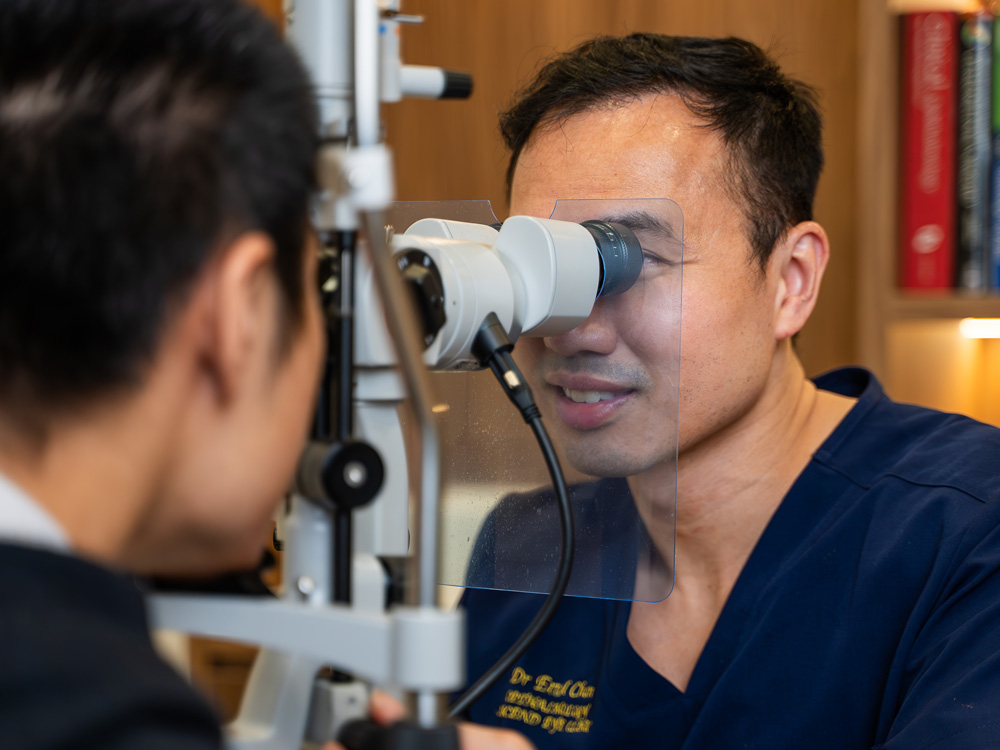
Your safety is our highest priority. Every diagnosis and treatment we provide is evidence-based to ensure that each step of your care is not only effective but also held to a high standard of safety and quality.
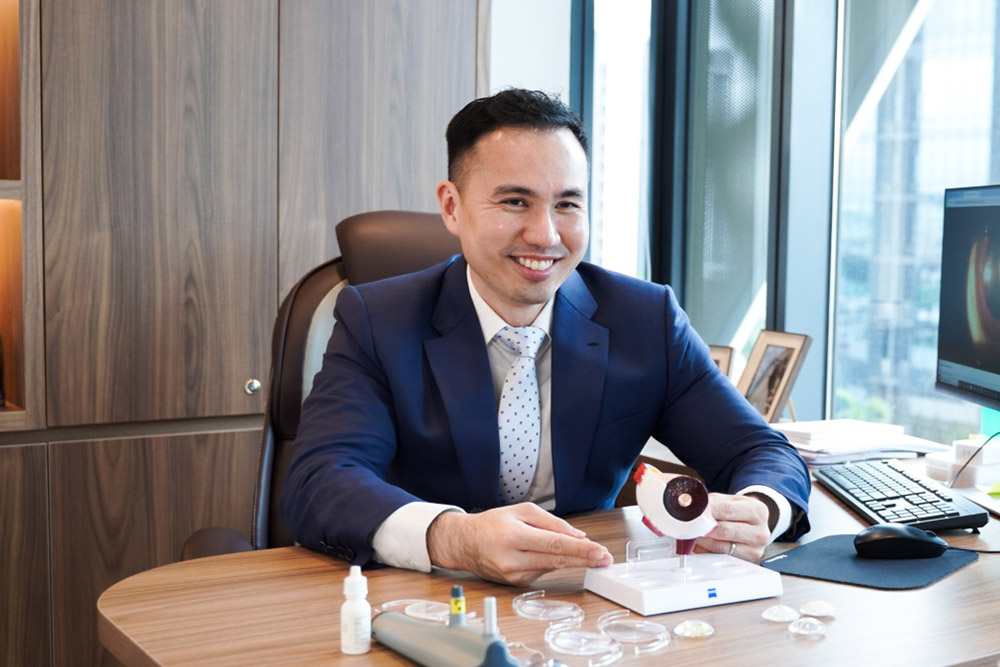
For pre-surgery, we will discuss all possible treatment options and recommends the most appropriate one for every patient. For post-surgery, we provide aftercare, including follow-up consultations and treatment plans tailored to every patient to promote optimal recovery.
Wish to book a consultation or have a question? WhatsApp Us!