
Glaucoma is a group of eye conditions that damage the optic nerve—the vital structure responsible for transmitting visual information from the eye to the brain. This damage is most commonly associated with elevated pressure inside the eye, known as intraocular pressure, but glaucoma can also occur even when the pressure appears to be within the normal range. Under healthy conditions, fluid within the eye (aqueous humour) is produced and drained continuously to maintain stable pressure. When the drainage system does not function efficiently or becomes blocked, pressure can rise and place stress on the optic nerve. Over time, this may lead to gradual and irreversible vision loss.

Glaucoma typically progresses slowly and without noticeable symptoms in its early stages. Many individuals are unaware they have the condition until significant optic nerve damage has already occurred. Peripheral or side vision is usually affected first, making early changes difficult to detect without specialised testing. As glaucoma advances, blind spots may develop, and in later stages, central vision can also be compromised.


Glaucoma develops when the optic nerve becomes damaged, most often due to increased pressure within the eye. Inside the eye, a clear fluid called aqueous humour is constantly produced and drained through a natural outflow pathway. When this drainage system becomes inefficient or blocked, fluid can accumulate and cause the pressure to rise. Over time, elevated pressure may stress the optic nerve and lead to progressive, irreversible vision loss.
However, glaucoma is not caused by pressure alone. Some individuals develop optic nerve damage even when eye pressure is within the normal range. This may be due to poor blood flow to the optic nerve, increased nerve sensitivity, or structural vulnerabilities that make the nerve more susceptible to damage.
Several factors can contribute to the onset or progression of glaucoma. Ageing is a major cause, as natural changes in the eye’s drainage system occur over time. Family history plays a significant role, suggesting a hereditary component. Other contributing causes include long-term steroid use, eye trauma, inflammation, previous eye surgery, or anatomical features such as narrow drainage angles or thin corneas. Systemic conditions like diabetes, hypertension, and sleep apnea may also affect optic nerve health.

Glaucoma progresses gradually, and the risk of vision loss increases as damage to the optic nerve accumulates over time. In the earliest phase, a person may only have risk factors such as elevated eye pressure, age, family history, or anatomical predispositions, with no symptoms or vision changes. As the disease develops, early optic nerve damage may begin silently, followed by subtle loss of peripheral vision that often goes unnoticed without specialised testing. With continued progression, the visual field narrows significantly, making everyday activities more difficult. In the most advanced stage, only a small central island of vision may remain, and without treatment, glaucoma can eventually lead to severe and irreversible loss of sight. Because optic nerve damage cannot be reversed, early detection and consistent management are essential to slow or prevent further deterioration.
No vision loss yet
Mild optic nerve changes begin; vision still appears normal.
Mild optic nerve changes begin; vision still appears normal.
Significant narrowing of the visual field, often described as “tunnel vision.”
Only a small central island of vision remains; high risk of severe, permanent sight loss if untreated.
Glaucoma often develops gradually and silently, which is why many people may not realise they have the condition until significant optic nerve damage has already occurred. In its early stages, glaucoma typically causes no pain or noticeable changes in vision, and the brain often compensates for small blind spots. As the disease progresses, subtle loss of peripheral vision may occur, eventually affecting daily activities such as navigating steps, driving, or seeing in dim lighting. Some forms of glaucoma, particularly angle-closure glaucoma, may cause sudden and more dramatic symptoms that require urgent attention.


Primary Open-Angle Glaucoma is the most common form of glaucoma and typically progresses slowly and without obvious symptoms in its early stages. In this condition, the drainage angle of the eye remains open, but the internal drainage system becomes less efficient over time, causing eye pressure to rise gradually. This steady increase in pressure can damage the optic nerve, leading to progressive loss of peripheral vision. Because the onset is silent and painless, many individuals are unaware they have the condition until significant optic nerve damage has already occurred.

Angle-closure glaucoma occurs when the drainage angle of the eye is narrow or becomes blocked, preventing fluid from exiting the eye effectively. It can occur gradually, where the angle becomes narrower over time, or suddenly, when the angle closes completely and causes a rapid rise in eye pressure. Acute angle-closure glaucoma is abrupt and intensely symptomatic, unlike other forms of glaucoma that progress slowly and quietly. The sudden spike in pressure can lead to severe eye pain, blurred vision, halos around lights, headache, nausea or vomiting, and a red eye, with vision deteriorating quickly if not treated promptly. This condition is considered an ocular emergency because prolonged high pressure can cause rapid and permanent damage to the optic nerve. Individuals with anatomically narrow angles, smaller eyes, a family history of angle-closure, or certain structural features are more prone to this type of glaucoma. Early identification of narrow angles through comprehensive eye examinations allows timely preventive treatment and can significantly reduce the risk of an acute attack.
This is an emergency and requires prompt treatment.

Normal-Tension Glaucoma occurs when the optic nerve becomes damaged even though the pressure inside the eye is within the medically accepted “normal” range. This happens because in some individuals, the optic nerve is more fragile or less able to tolerate pressure, even levels that are considered normal for the general population. Several factors may contribute to this increased vulnerability. One key factor is reduced blood flow to the optic nerve, which can occur due to vascular conditions such as low blood pressure, circulation problems, or nighttime dips in blood pressure that temporarily reduce oxygen supply to the nerve. Structural characteristics of the optic nerve may also play a role; some people have a thinner or more delicate optic nerve head, making it more susceptible to injury. Additionally, conditions such as migraine, sleep apnea, or systemic vascular dysregulation may further impair blood flow or increase sensitivity of the optic nerve to pressure. Because the pressure itself does not appear elevated during routine eye checks, these underlying issues can go unnoticed without specialised tests. As a result, the optic nerve sustains gradual damage over time, leading to the characteristic pattern of peripheral vision loss associated with glaucoma, even when eye pressure readings look normal.
The symptoms of Normal-Tension Glaucoma resemble those of Primary Open-Angle Glaucoma, as both conditions develop slowly and affect vision in similar ways. The main difference between the two lies in their underlying cause: Primary Open-Angle Glaucoma typically involves raised eye pressure, whereas Normal-Tension Glaucoma occurs despite pressure being within the usual range due to increased optic nerve sensitivity or reduced blood flow.
In contrast, the symptoms of Normal-Tension Glaucoma are completely different from those seen in Acute Angle Closure, which presents suddenly and intensely. Acute angle closure causes a rapid and dramatic rise in eye pressure, producing noticeable pain and visual disturbances. This form of glaucoma is considered an ocular emergency because the pressure spike can cause rapid and irreversible optic nerve damage if not treated promptly.

Secondary glaucoma refers to a group of conditions in which optic nerve damage and elevated eye pressure occur as a result of another underlying eye or systemic problem. Unlike primary forms of glaucoma, which develop on their own, secondary glaucoma arises from identifiable causes such as eye injuries, inflammation (uveitis), previous eye surgery, long-term steroid use, advanced cataracts, diabetes-related eye disease, or blocked drainage channels due to pigment, blood, or lens material. These conditions interfere with the eye’s ability to maintain normal fluid balance, leading to increased pressure or increased susceptibility of the optic nerve to damage. The onset and severity of symptoms can vary widely depending on the underlying cause. Some types progress slowly with subtle vision changes, while others may present more abruptly if pressure rises quickly. Prompt diagnosis and treatment of the underlying condition, alongside management of eye pressure, are essential to protect long-term vision.
Similar to Primary Open-Angle / Normal-Tension Glaucoma: Steroid-induced, pigmentary, pseudoexfoliation, chronic uveitic, some traumatic, late post-surgical
Similar to Acute Angle Closure:
Neovascular, lens-induced, acute post-surgical, some traumatic
Glaucoma evaluation involves a series of specialised tests designed to assess eye pressure, examine the drainage angle, and evaluate the health of the optic nerve. Because glaucoma often progresses quietly and without early symptoms, these tests play an essential role in detecting damage before vision is affected. Each test provides different information: some measure the pressure inside the eye, others capture detailed images of the optic nerve, while visual field tests map areas where sight may be weakening. Together, these assessments help determine whether glaucoma is present, how advanced it may be, and whether it is progressing over time. Regular testing allows early diagnosis, more accurate monitoring, and timely adjustments to treatment to help preserve long-term vision.
These tests are performed periodically to monitor progression over time.
Glaucoma treatment focuses on lowering eye pressure to a level that is safe for the optic nerve, helping to slow or prevent further vision loss. While existing damage cannot be reversed, timely and consistent treatment may help reduce the risk of progression. The choice of treatment depends on the type of glaucoma, the stage of disease, eye pressure levels, and individual factors such as age, anatomy, and overall health. Treatment may begin with medicated eye drops or laser procedures and progress to minimally invasive or conventional surgeries if more pressure reduction is needed. In many cases, a combination of approaches is used and adjusted over time as the condition evolves. Ongoing monitoring is essential, as glaucoma is a lifelong condition that requires regular follow-up to ensure pressure remains controlled and the optic nerve remains protected.
Medicated Eye Drops: Lower eye pressure by reducing fluid production, increasing drainage, or both
Non-incisional in selected cases, short recovery.
| Treatment Type | Mechanism | Typical Role | Notes |
|---|---|---|---|
|
Eye Drops |
Reduce fluid or increase drainage |
First-line |
Requires regular use |
|
SLT Laser |
Improves natural drainage |
Early–moderate disease |
May reduce reliance on drops in some cases |
|
Iridotomy (LPI) |
Opens narrow angles |
Angle-closure risk |
Used to reduce the risk of angle closure in suitable cases |
|
MIGS |
Enhances outflow via micro-devices |
Mild–moderate glaucoma |
Often paired with cataract surgery |
|
Trabeculectomy |
Creates new drainage channel |
Moderate–severe |
Provides substantial pressure lowering in appropriate cases |
|
Tube Shunts |
Diverts fluid externally |
Complex glaucoma |
For specific cases |

Every patient’s condition, lifestyle, and goals are unique — and so should their care. We take the time to listen, understand, and evaluate your needs in detail. From there, we develop a tailored treatment plan that delivers the most ideal outcomes.

For most of us, our vision is our most valued sense. Whether you are a senior, of working age, or the parent of a child who needs help, we will prioritise understanding your case and determining the most suitable treatment to improve or preserve your vision. We welcome complex cases as we care about you, your sight and your future.

We harness the power of ophthalmic technology to deliver precise diagnostics, accurate treatments, and faster recovery times. From imaging systems to minimally invasive surgical tools, our investment in technology allows us to provide safe and effective eye care.
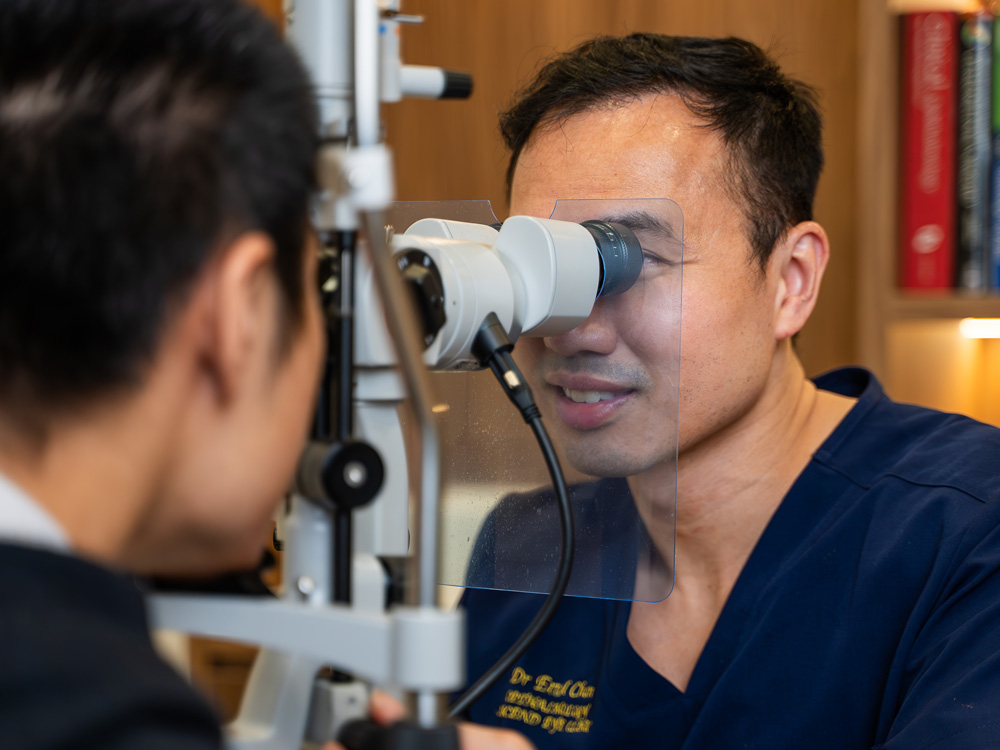
Your safety is our highest priority. Every diagnosis and treatment we provide is evidence-based to ensure that each step of your care is not only effective but also held to a high standard of safety and quality.
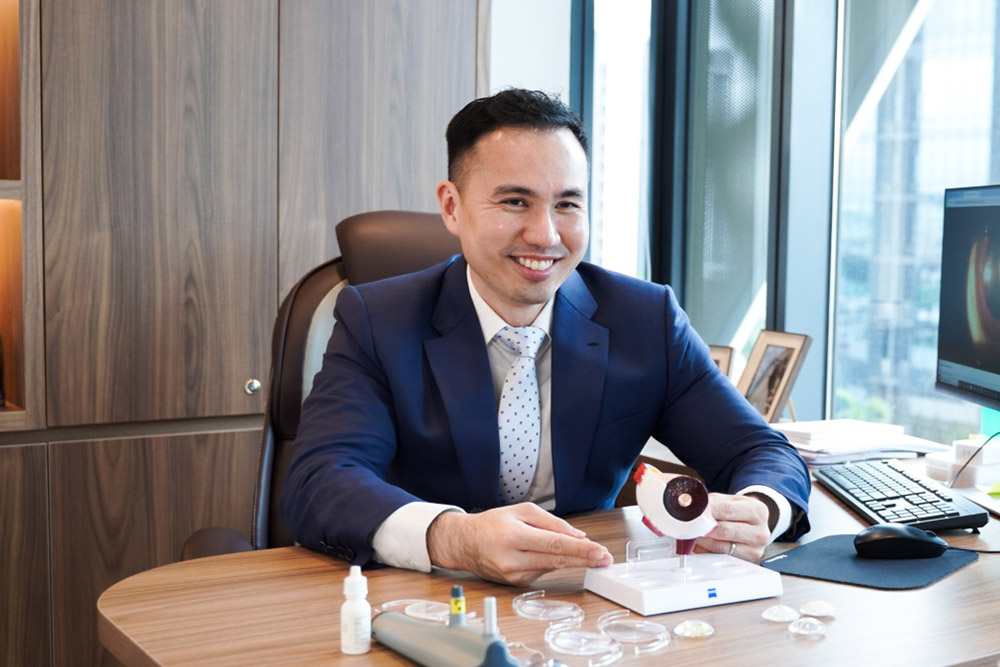
For pre-surgery, we will discuss all possible treatment options and recommends the most appropriate one for every patient. For post-surgery, we provide aftercare, including follow-up consultations and treatment plans tailored to every patient to promote optimal recovery.
Wish to book a consultation or have a question? WhatsApp Us!