
Modern FemtoLASIK combines precise, bladeless laser technology with a treatment plan customised to your eyes. By correcting your prescription, FemtoLASIK can give you clear everyday vision and greater freedom from glasses and contact lenses, all within a quick treatment session.
FemtoLASIK, which stands for Femtosecond Laser-Assisted In Situ Keratomileusis, is a commonly performed laser vision correction procedure worldwide. It is designed to reduce dependence on glasses and contact lenses by reshaping the cornea so that light can focus more accurately on the retina.
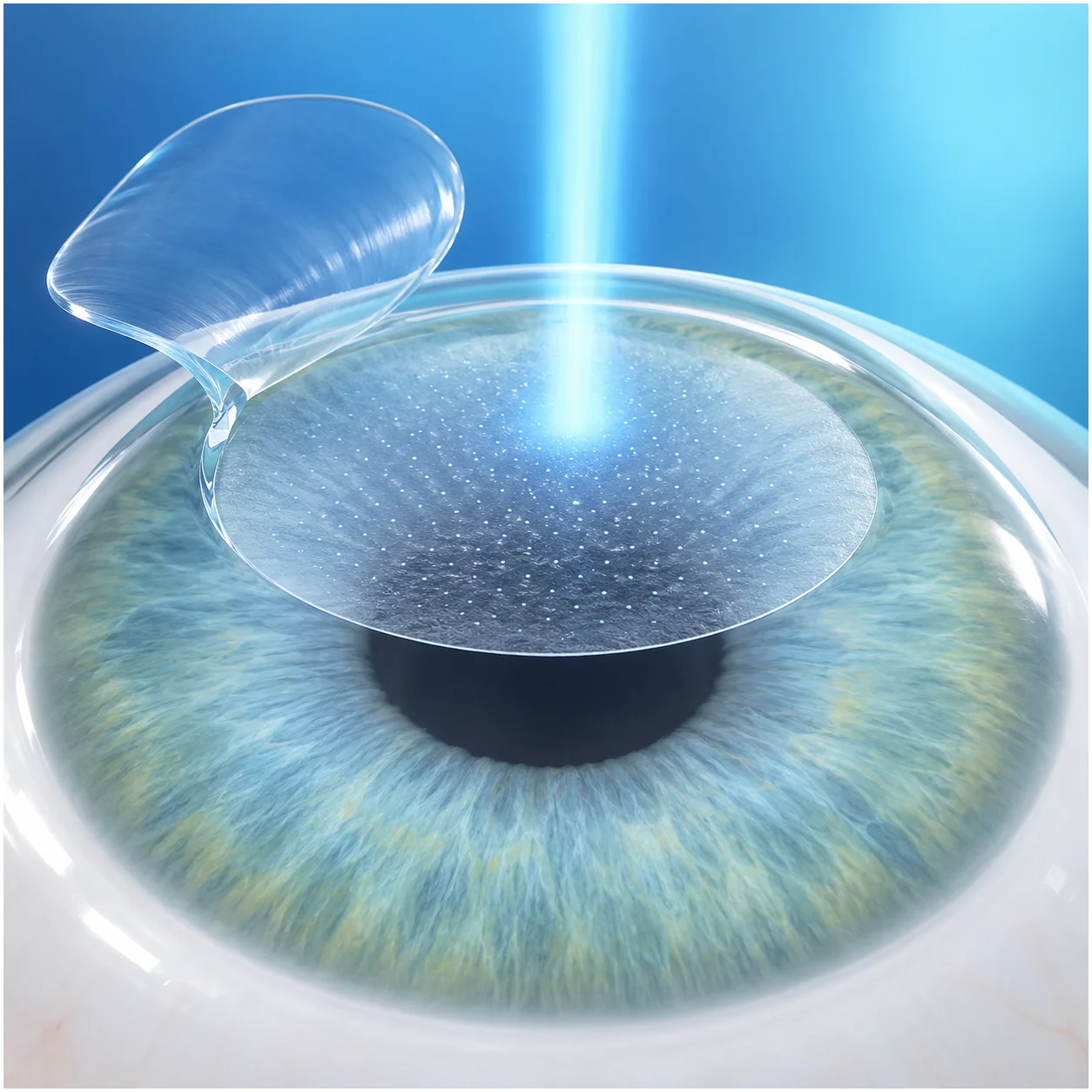
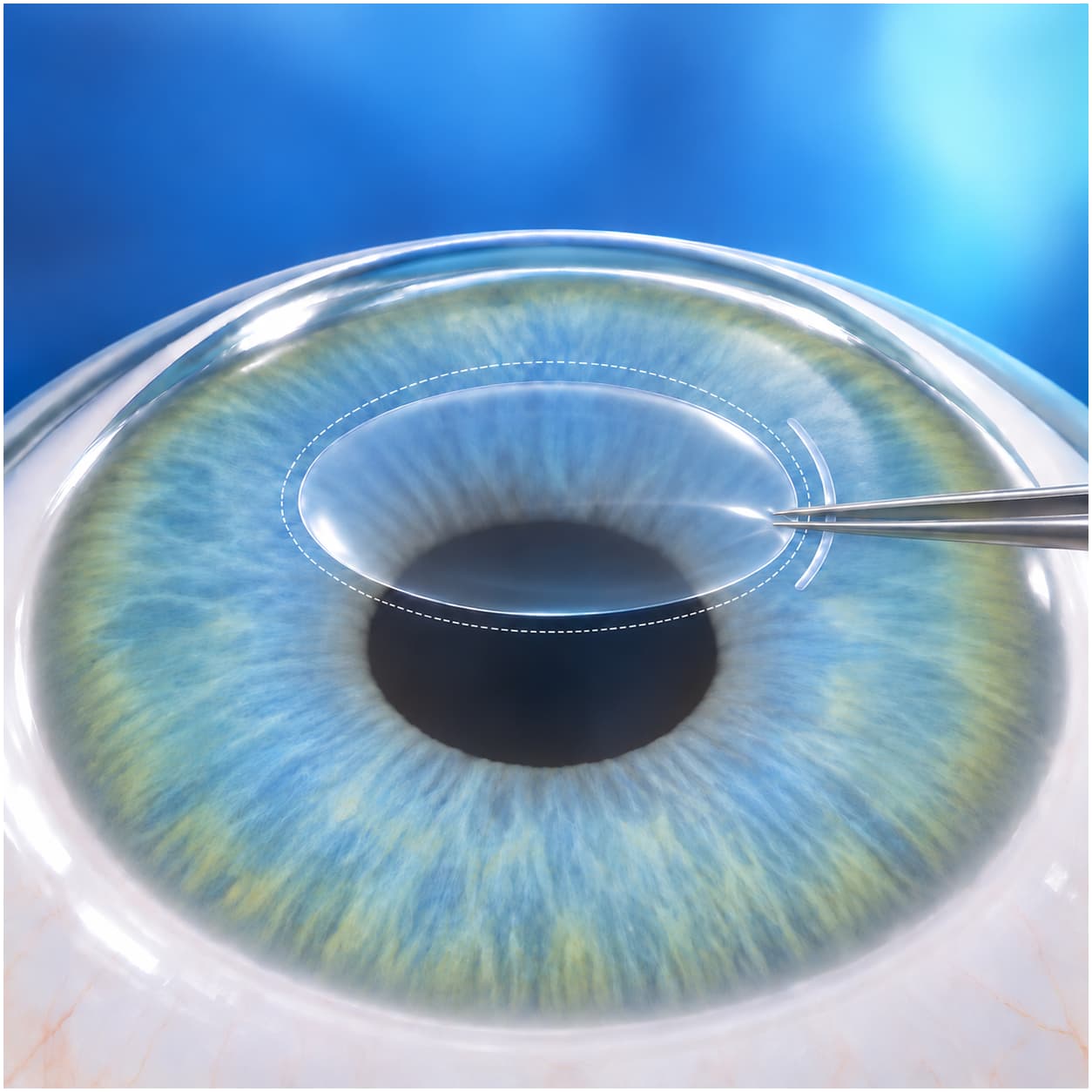
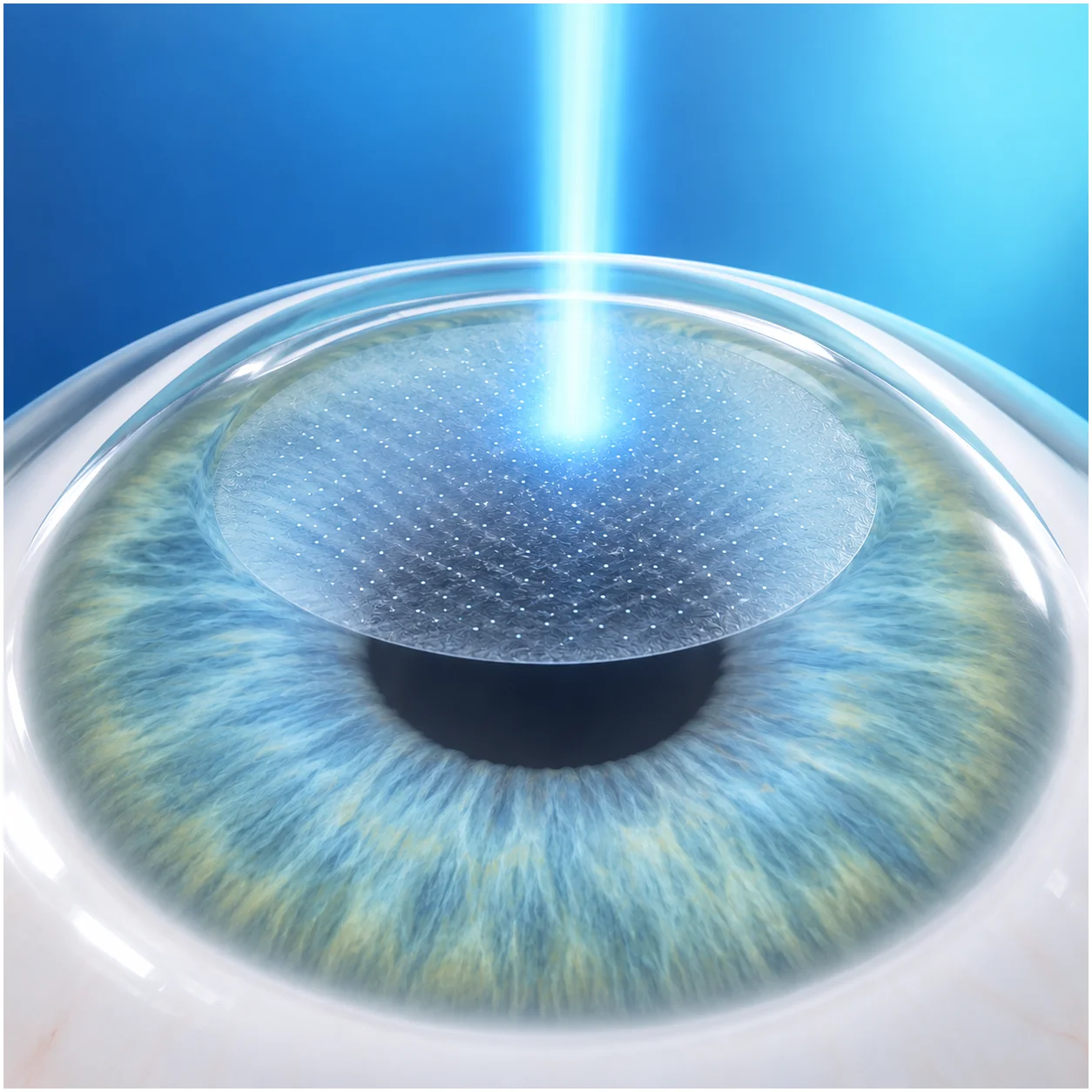
Our FemtoLASIK procedure uses a bladeless technique, with a femtosecond laser used to create a thin, precise corneal flap. The flap is then gently lifted, after which an excimer laser is used to reshape the underlying corneal tissue according to your individual prescription. Once the correction is complete, the flap is carefully repositioned.
By changing the curvature of the cornea, FemtoLASIK can correct short-sightedness (myopia), long-sightedness (hyperopia), and astigmatism. Modern laser systems combine detailed pre-operative measurements with highly controlled laser delivery, allowing treatment to be tailored to the characteristics of each eye.
The procedure itself is quick, with most patients experiencing minimal discomfort and rapid visual recovery.

The first stage of FemtoLASIK is performed using the ZEISS VISUMAX 800 femtosecond laser, which creates the corneal flap in around 5 seconds. The laser operates at up to 2,000 kHz, while its curved contact interface follows the natural curvature of the cornea during flap creation.
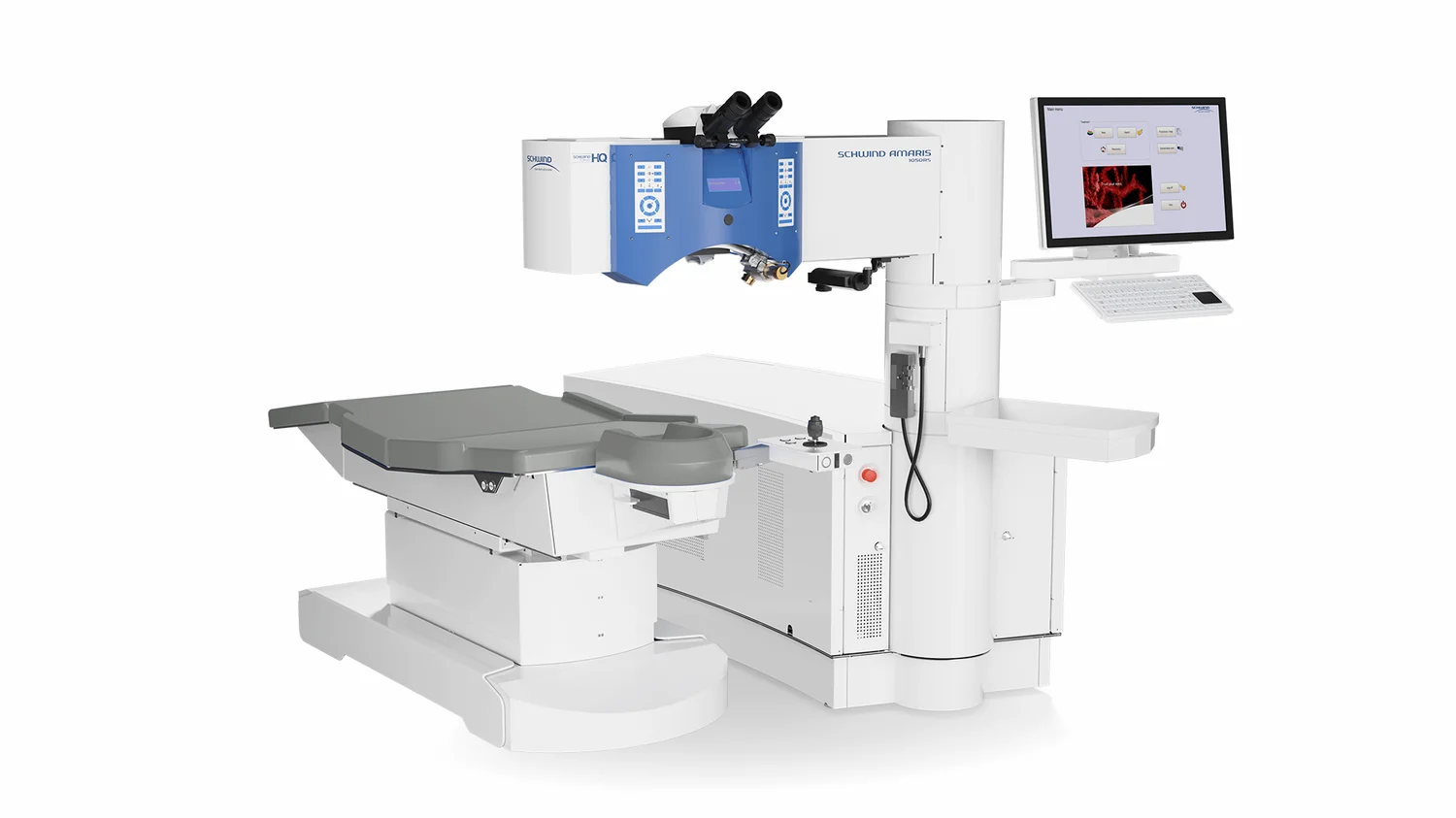
Once the flap is gently lifted, the SCHWIND AMARIS 1050RS excimer laser reshapes the underlying corneal tissue according to your treatment prescription. Operating at 1050 Hz, the system incorporates 7D eye tracking, which monitors eye movement and adjusts laser delivery during treatment. The laser ablates approximately one dioptre in 1.3 seconds, allowing the programmed corneal reshaping to be completed within a short treatment time.

FemtoLASIK can significantly reduce your dependence on eyewear, making everyday activities more convenient. Reducing the need for replacement glasses, contact lenses, and solutions also reduces the recurring costs associated with vision correction.
With FemtoLASIK, the corneal flap is created using a femtosecond laser rather than a blade. The treatment is completed within a short period of time, and both eyes are often treated during the same session.
FemtoLASIK can treat a wide range of prescriptions for suitable candidates.
Once the cornea is reshaped, the correction is intended to be permanent. Your eyes will still undergo natural changes with age, but the corneal correction itself largely does not wear off.
By reducing dependence on glasses and contact lenses, FemtoLASIK reduces the recurring costs of replacing prescription eyewear, purchasing contact lenses, and buying cleaning solutions over the years.
FemtoLASIK can correct a wide range of prescriptions but suitability depends more than on your spectacle power alone. Your corneal shape and thickness, prescription stability, eye health, and lifestyle are all considered when determining whether FemtoLASIK is the right option for you.
You are eligible for FemtoLASIK if you:
Depending on your corneal thickness and shape, corneal collagen cross-linking may be recommended alongside laser vision correction to provide additional strengthening. Learn more about the procedure here.
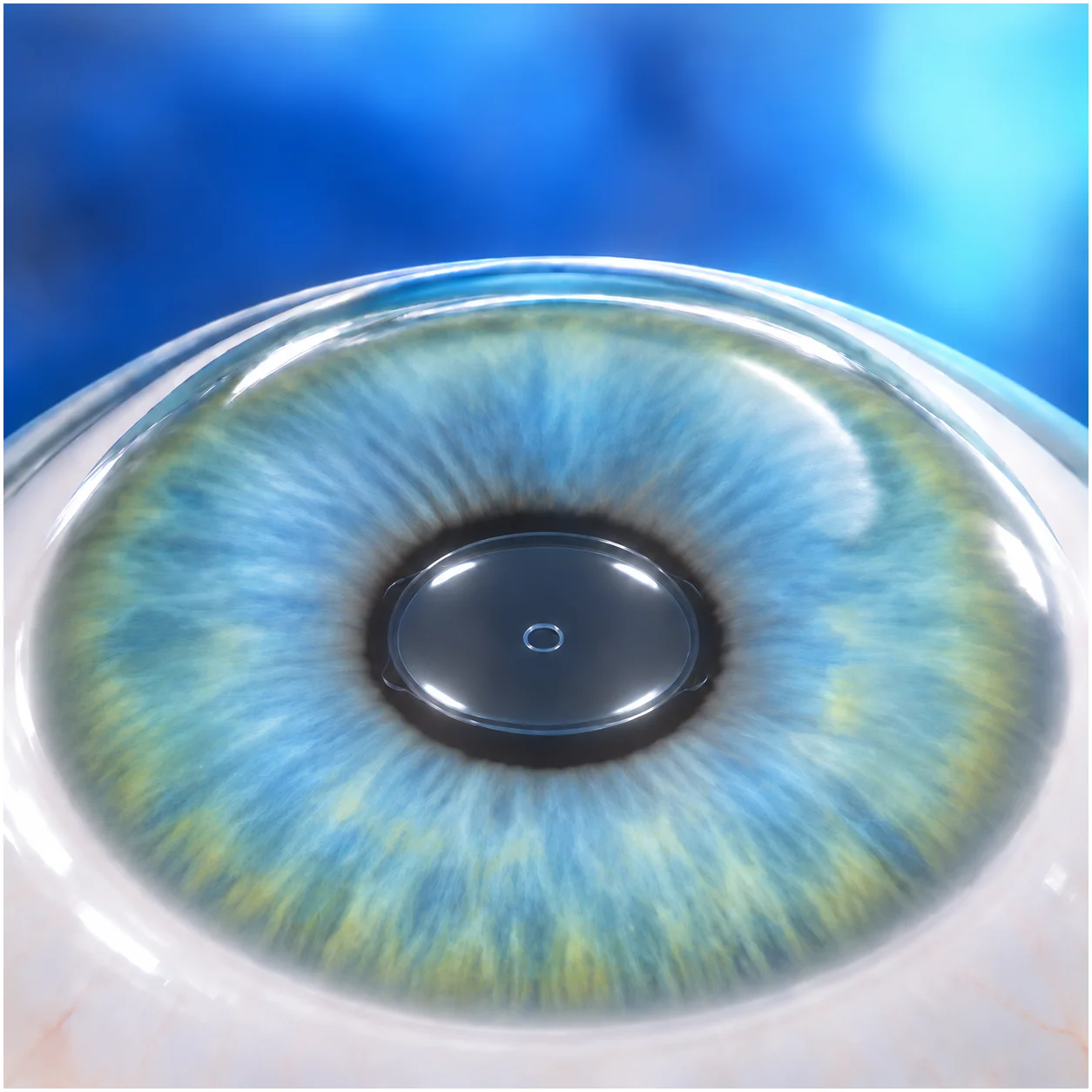
During your FemtoLASIK suitability assessment, we will also assess whether other vision correction options we offer may be suited to your eyes, lifestyle, and visual goals. Alternatives such as SMILE Pro 2.0, SafeSight Transepithelial PRK (TransPRK), and Evo Implantable Collamer Lens (Evo ICL) may also be suited to your eyes.
| FemtoLASIK | SMILE Pro 2.0 | SafeSight Transepithelial PRK | EVO ICL | |
|---|---|---|---|---|
| Approach | A thin corneal flap is created before the cornea is reshaped with a laser | Flapless procedure where a lenticule is removed through a small corneal incision | Flapless surface laser treatment | A lens is implanted between the iris and natural lens |
| Procedure Time (per eye) | 10 to 15 minutes | 3 to 5 minutes | 3 to 5 minutes | 15 to 20 minutes |
| Correction | Myopia, hyperopia & astigmatism | Myopia & astigmatism | Myopia, hyperopia & astigmatism | Myopia, hyperopia & astigmatism |
| Downtime | 2 to 3 days | 2 to 3 days | 5 days | 2 to 3 days |
From finding out whether FemtoLASIK is right for you to returning to clearer vision, we will guide you through each stage of the process. Your journey begins with a detailed suitability assessment, followed by personalised treatment planning, your bladeless FemtoLASIK procedure, and structured aftercare as your eyes heal and your vision settles.
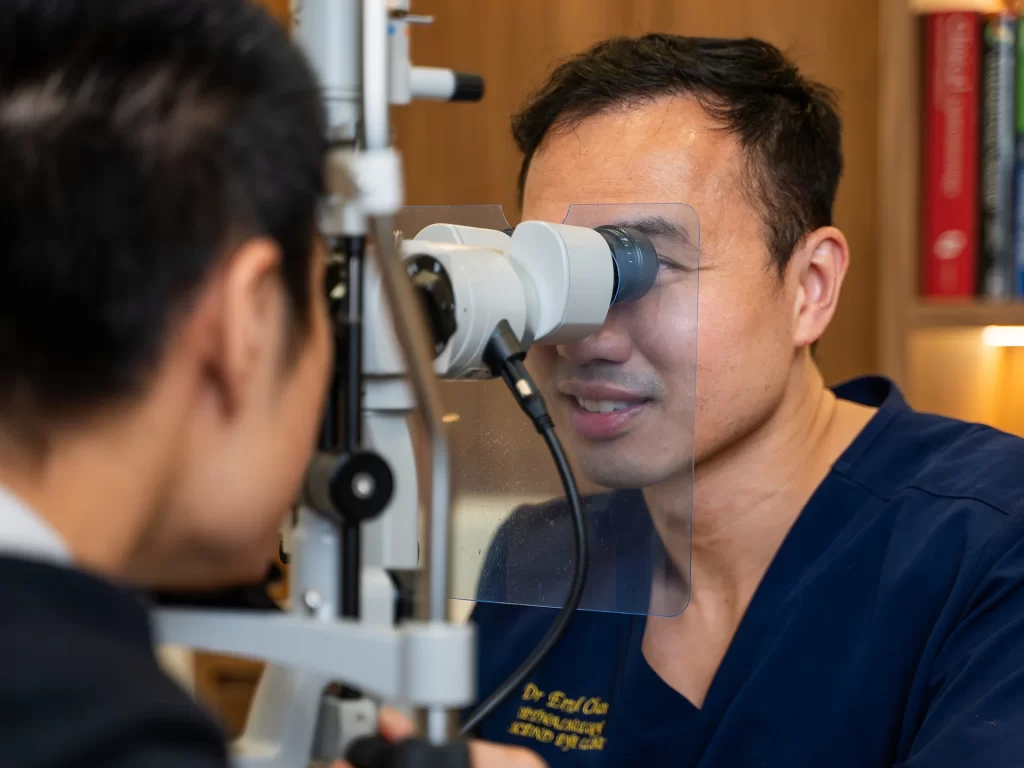
Your first step is a comprehensive assessment of your vision, prescription and eye health, including detailed measurements of your corneal shape and thickness.
To ensure these measurements are accurate, contact lenses should be stopped before your assessment:
We will review these findings together with your lifestyle, visual needs and expectations, and compare FemtoLASIK with other suitable options such as SMILE Pro 2.0, SafeSight Transepithelial PRK and EVO ICL.
The suitability assessment and FemtoLASIK procedure are performed on separate days, allowing your measurements to be reviewed carefully before treatment is planned. Before your procedure, we will provide clear preparation instructions, including when to stop contact lens wear. We will also explain your post-operative eye drops, aftercare, and temporary activity restrictions. You should also arrange for someone to accompany you home as you will not be able to drive immediately after FemtoLASIK.
FemtoLASIK is performed while you are awake using anaesthetic eye drops to keep your eyes comfortable. A small device gently keeps your eyelids open so you do not need to worry about blinking during treatment.
Throughout the procedure, a dim green fixation light helps you keep your gaze steady while the laser corrects your vision.
The procedure is performed one eye at a time. First, a femtosecond laser creates a thin, precise corneal flap without the use of a blade. You may notice some pressure and your vision may temporarily dim during this part of the procedure.
The flap is then gently lifted and an excimer laser precisely reshapes the underlying cornea according to your treatment plan. The laser tracks the position of your eye during treatment to maintain accurate delivery of the correction. Once reshaping is complete, the corneal flap is carefully repositioned without the need for stitches, before the same process is performed on the other eye.
The laser treatment itself is quick, and both eyes can usually be treated during the same session.
Your vision will usually be blurry immediately after treatment, but improvement can occur rapidly over the first several hours and days.
As the anaesthetic drops wear off, your eyes may feel watery, gritty or sensitive to light for the first few hours. Resting your eyes is usually the most comfortable way to spend the remainder of the day. You will also begin your prescribed eye drops and should avoid rubbing your eyes while the corneal flap begins to heal.
Your first follow-up allows us to check the position and healing of the corneal flap, assess your vision and make sure your eyes are recovering as expected.
Your vision may continue to sharpen and stabilise over the following days and weeks. Further follow-up appointments allow us to monitor your recovery, review your visual result and address any dryness, fluctuations or other symptoms while your eyes settle.
Caring for Your Eyes After FemtoLASIK
Our team remains available throughout your recovery should you have any questions or concerns after your procedure.
Take the first step towards greater freedom from glasses and contact lenses. A comprehensive suitability assessment will determine whether FemtoLASIK is suitable for your eyes and help you understand the vision correction options available to you.
Schedule a consultation to explore your options for clearer vision.
Yes. FemtoLASIK is an established form of laser vision correction with a strong safety record in appropriately selected patients. Before recommending treatment, we carefully assess your prescription, corneal shape and thickness, tear film and overall eye health to make sure FemtoLASIK is suitable for your eyes.
Yes. FemtoLASIK is performed while you are awake, with anaesthetic eye drops used to numb the eyes and keep you comfortable. We will guide you through every stage of the procedure, so you simply need to relax and follow the instructions given to you.
The laser treatment itself should not be painful because the eyes are numbed beforehand. You will feel some pressure for a short period while the femtosecond laser creates the corneal flap. After treatment, watering, grittiness and light sensitivity are common for the first few hours and settle as the eyes recover.
You do not need to worry about blinking. A small eyelid holder gently keeps your eyelids open during treatment, so you do not have to consciously stop yourself from blinking.
Small eye movements are normal and expected. The laser system tracks the position of your eye during treatment, while we guide you where to look. You do not need to keep your eye perfectly still by yourself.
FemtoLASIK is a relatively quick procedure, taking around 15 minutes per eye, with the lasers active for only part of that time. Each eye is treated separately using the femtosecond laser to create the flap, followed by the excimer laser to reshape the cornea.
Yes. Both eyes are usually treated during the same FemtoLASIK session. One eye is completed before we proceed with the second, allowing both eyes to recover together.
You will be able to see immediately after FemtoLASIK. Vision improves quickly over the first day and continues to sharpen and stabilise as the eyes heal over the following days and weeks.
Most patients only require a short period away from desk-based work. Your eyes can feel dry or sensitive during the first few days, so allowing yourself some time to rest makes the early recovery more comfortable. We will advise you based on your work environment and visual demands.
Yes. Screens do not damage the FemtoLASIK correction. However, prolonged screen use reduces blinking and can make dryness or fluctuating vision more noticeable during the early recovery period. Regular breaks and lubricating eye drops help keep your eyes comfortable.
You should not drive immediately after treatment and should arrange for someone to bring you home. Driving can resume once your vision has recovered sufficiently and you feel comfortable seeing clearly on the road. Night driving can take slightly longer to feel completely comfortable while early glare or halos settle.
Temporary dryness is common after LASIK because the procedure temporarily affects the corneal nerve signals involved in tear-film regulation. This improves as the cornea recovers. We also assess for dry eye before treatment and will manage any significant dryness before proceeding with FemtoLASIK.
Halos, glare or starbursts around lights can be noticeable during the early recovery period, particularly at night. These generally become less noticeable as the eyes settle. Your pre-operative assessment also helps us evaluate factors that influence your visual quality after FemtoLASIK.
Yes. FemtoLASIK permanently reshapes the cornea, so the laser correction itself does not simply wear off. Your eyes will still undergo normal age-related changes over time, including presbyopia and eventually cataracts.
Your natural prescription can change over time even though the FemtoLASIK correction itself is permanent. If a significant prescription develops again, we can reassess your eyes and discuss the most appropriate way to restore clear vision, including an enhancement where your cornea remains suitable.
Yes. Contact lenses temporarily alter the shape of the cornea and can affect the accuracy of your measurements. You will need to switch to glasses before your FemtoLASIK assessment, and we will tell you exactly how long to stop your lenses depending on the type you wear.
FemtoLASIK can correct a broad range of myopia and astigmatism. For higher prescriptions, we pay particular attention to your corneal thickness, shape and the amount of healthy tissue that will remain after treatment. A high prescription does not automatically mean you cannot reduce your dependence on glasses, as other vision correction options are also available.
That does not mean you have run out of options. FemtoLASIK requires sufficient healthy corneal tissue for treatment, so if your cornea is not suitable, we can assess whether another procedure we offer, such as TransPRK, SMILE or ICL, is better suited to your eyes.
Not necessarily. Being over 40 does not automatically rule out FemtoLASIK, but presbyopia and the condition of your natural lens become increasingly important when planning your vision correction. We will assess your distance vision, near-vision needs, cornea and lens before discussing whether FemtoLASIK, monovision or another option better suits your stage of life.
FemtoLASIK does not stop presbyopia, which is the normal age-related reduction in near focusing ability. If both eyes are corrected for distance, reading glasses will eventually become necessary as presbyopia progresses. For suitable patients, we can also discuss monovision and other strategies based on how you use your vision day to day.
Yes. Previous FemtoLASIK does not prevent you from having cataract surgery later in life. When cataract surgery is eventually required, we take your previous laser vision correction into account when measuring the eye and selecting the appropriate lens implant.
Light everyday activity can resume fairly quickly. Strenuous exercise, contact sports and activities where sweat, dust or accidental impact can reach the eyes require a longer break while the corneal flap heals. We will give you clear instructions on when you can safely return to your usual activities.
Swimming should be avoided during the initial healing period because pool water, seawater and hot tubs can irritate the eyes and expose them to microorganisms. We will let you know when your eyes have healed sufficiently for you to return to swimming.
There is no need to panic over every accidental touch around the eye. What we want you to avoid during the early recovery period is deliberate or vigorous rubbing while the corneal flap is healing. If the eye is rubbed forcefully and you notice sudden blurring, discomfort or a change in vision, contact us so we can check the eye.
That does not mean you have run out of options for reducing your dependence on glasses or contact lenses. Your suitability assessment is designed to determine which form of vision correction is best suited to your eyes.
If FemtoLASIK is not the best option, we will talk you through the other vision correction treatments we offer, including SMILE Pro 2.0, SafeSight Transepithelial PRK, EVO ICL, and Refractive Lens Exchange to recommend the approach that best fits your prescription, eye measurements, age, lifestyle and visual goals.
Wish to book a consultation or have a question? WhatsApp Us!