
EVO Implantable Collamer Lens™ (ICL) surgery is a non-laser vision correction procedure that places a biocompatible Collamer® lens inside the eye, behind the iris and in front of the natural lens. It can correct myopia and astigmatism while preserving the cornea, making it particularly suitable for patients with higher prescriptions or those who may not be ideal candidates for laser vision correction.
EVO ICL surgery is a vision correction procedure that involves placing a thin, flexible lens made from a biocompatible material, Collamer, inside the eye. The lens is positioned behind the iris and in front of your natural lens, where it works with the eye’s natural focusing system to correct both myopia and hyperopia, with or without astigmatism.
During surgery, the folded EVO ICL is inserted through a small opening in the cornea, where it gently unfolds before being positioned behind the iris. The procedure is entirely reversible, as the lens can be surgically removed or exchanged in the future if required.
EVO ICL takes a different approach to vision correction by adding a corrective lens inside the eye rather than reshaping the cornea.
| EVO ICL | Laser Vision Correction | |
|---|---|---|
| How it works | Adds a corrective lens inside the eye | Reshapes the cornea to change its focusing power |
| Effect on the cornea | Preserves the corneal structure without removing tissue | Requires controlled reshaping of corneal tissue |
| Reversibility | The implanted lens can be removed or exchanged | The corneal reshaping is permanent |
| Prescription | Particularly useful for higher degrees of myopia and selected corneal profiles | Suitability is influenced by prescription, corneal shape, and corneal thickness |
Each EVO ICL is selected specifically for the individual eye, with the lens power and size determined from detailed measurements taken during the suitability assessment.
A key feature of EVO ICL is its exclusive Collamer material. Collamer is a soft, highly flexible lens material that is designed to be highly compatible with the eye. Its biocompatible properties help reduce the likelihood of inflammation and unwanted cellular reactions around the lens after implantation. Collamer also provides UV protection, helping reduce the amount of ultraviolet light reaching the eye’s natural lens.
It has a long clinical track record, having been used in ICL technology for over 30 years, with millions of lenses distributed worldwide.
EVO ICL offers a tissue-preserving approach to vision correction, combining clear vision with the flexibility of a removable lens.

EVO ICL corrects vision without removing or reshaping corneal tissue, allowing the cornea to retain its natural structure.
EVO ICL can correct moderate to high levels of myopia, including astigmatism, and can be particularly useful for patients with thinner corneas.
The Collamer material incorporates UV protection to help reduce the transmission of ultraviolet light through the lens.
For patients with higher prescriptions, halos and starbursts can be more noticeable after some forms of vision correction. EVO ICL provides good night vision with fewer visual disturbances.
EVO ICL does not remove corneal tissue, helping to preserve the corneal nerves involved in maintaining the eye’s natural tear response. EVO ICL has been shown to not cause or worsen dry eye syndrome.
No corneal tissue is permanently removed. The EVO ICL is designed for long-term implantation but can be surgically removed or exchanged in the future if required.
EVO ICL is performed as an outpatient procedure, typically taking around 15 minutes per eye, with many patients returning to their usual daily activities within 1 to 2 days.
By reducing dependence on glasses and contact lenses, EVO ICL reduces the recurring costs of replacing prescription eyewear, purchasing contact lenses, and buying cleaning solutions over the years.
EVO ICL is a strong option for adults who want vision correction without removing corneal tissue. Because the lens is implanted inside the eye while the natural lens remains in place, it is particularly useful for patients with higher prescriptions or those who are less suited to corneal laser procedures.
You are a candidate for EVO ICL surgery if you:

During your EVO ICL suitability assessment, we will also assess whether other vision correction options we offer may be suited to your eyes, lifestyle, and visual goals. Alternatives such as FemtoLASIK, SMILE Pro 2.0, and SafeSight Transepithelial PRK will be considered based on your overall suitability and individual visual needs.
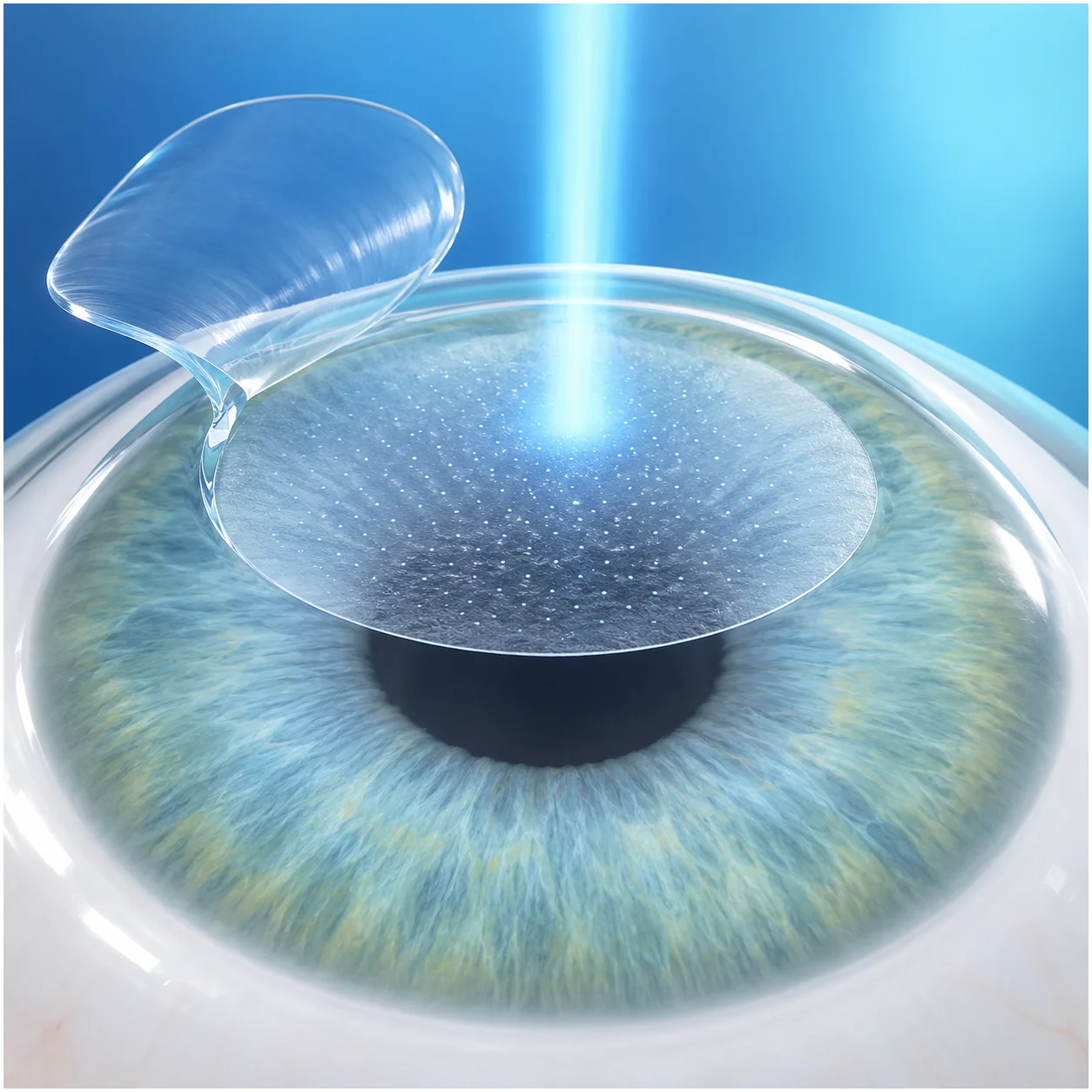
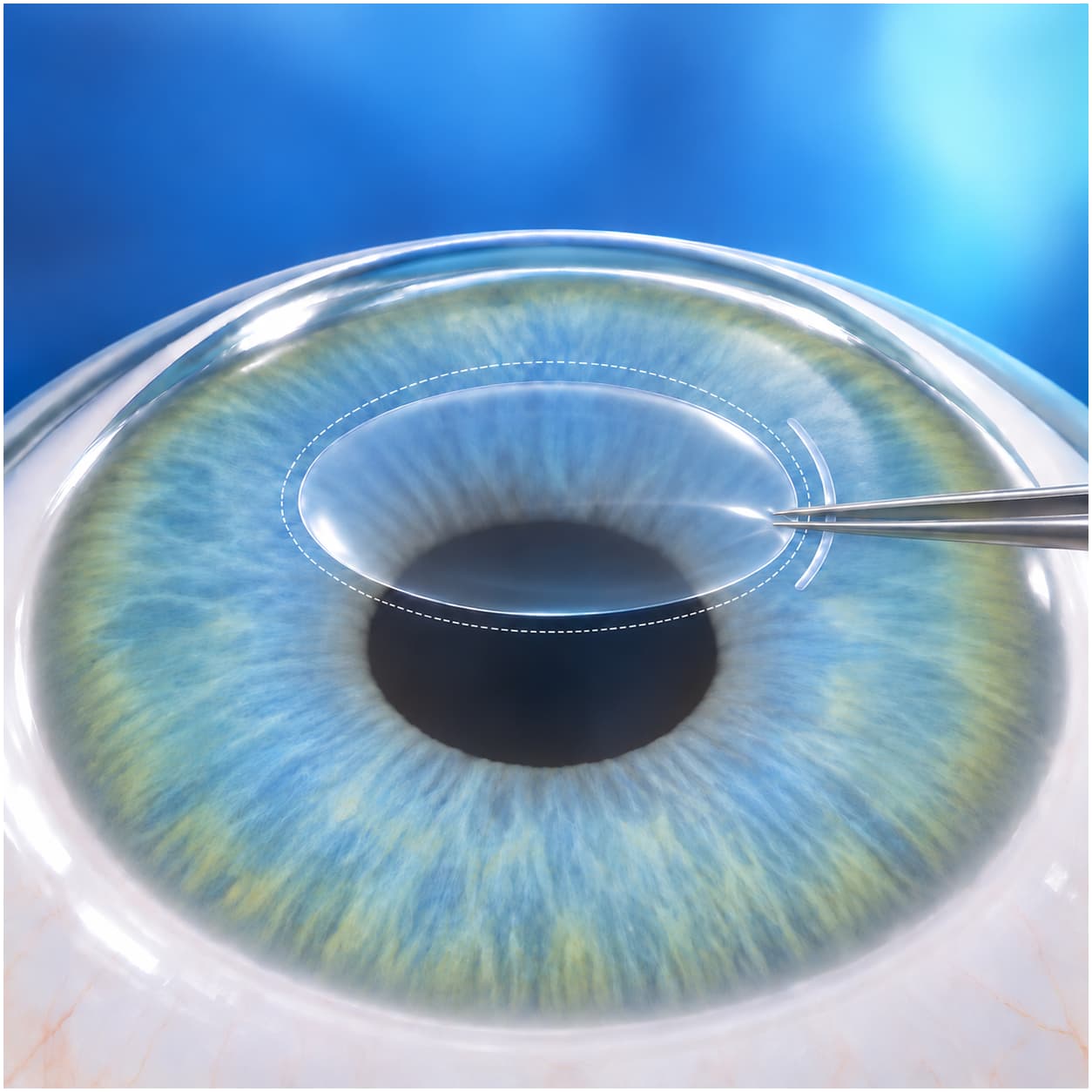
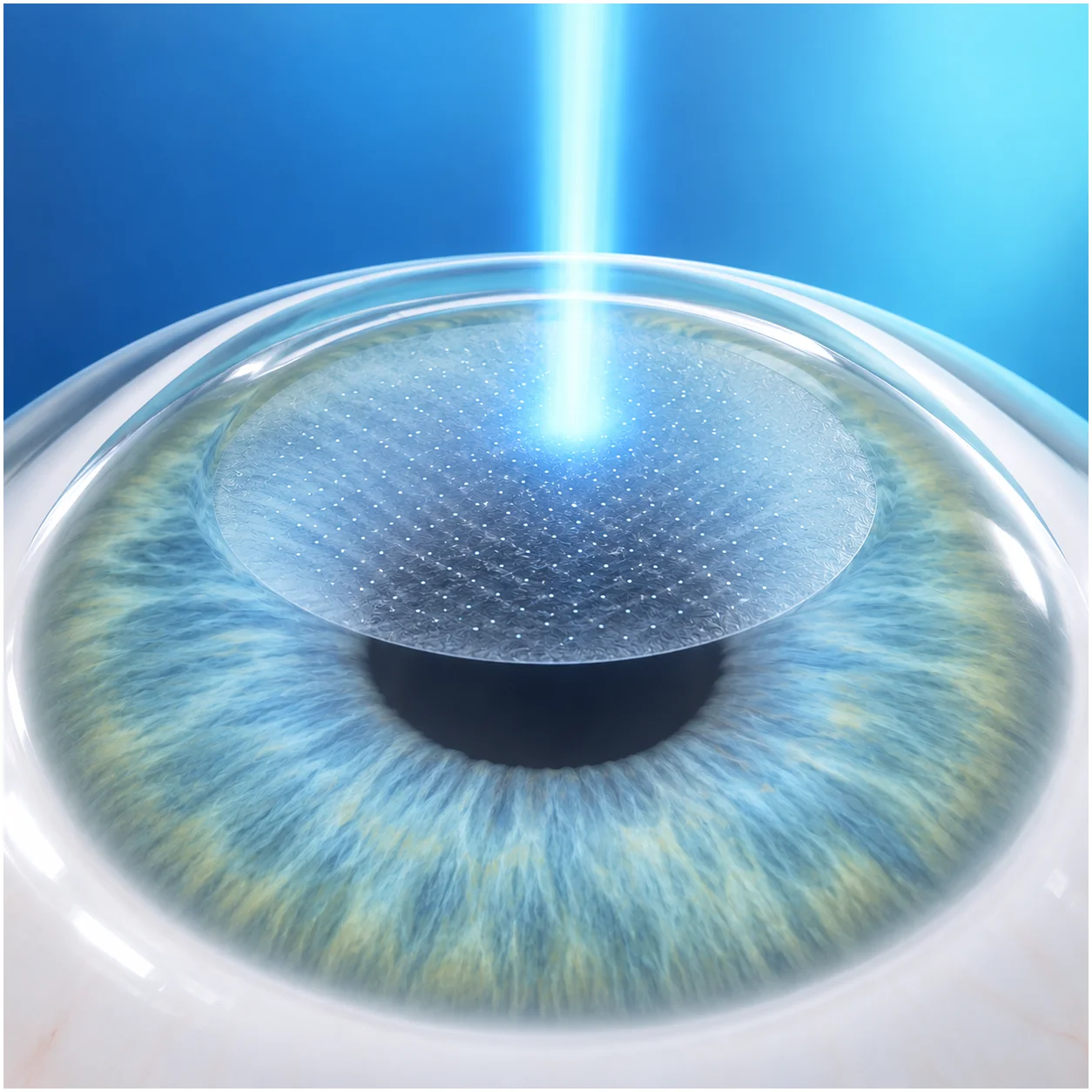
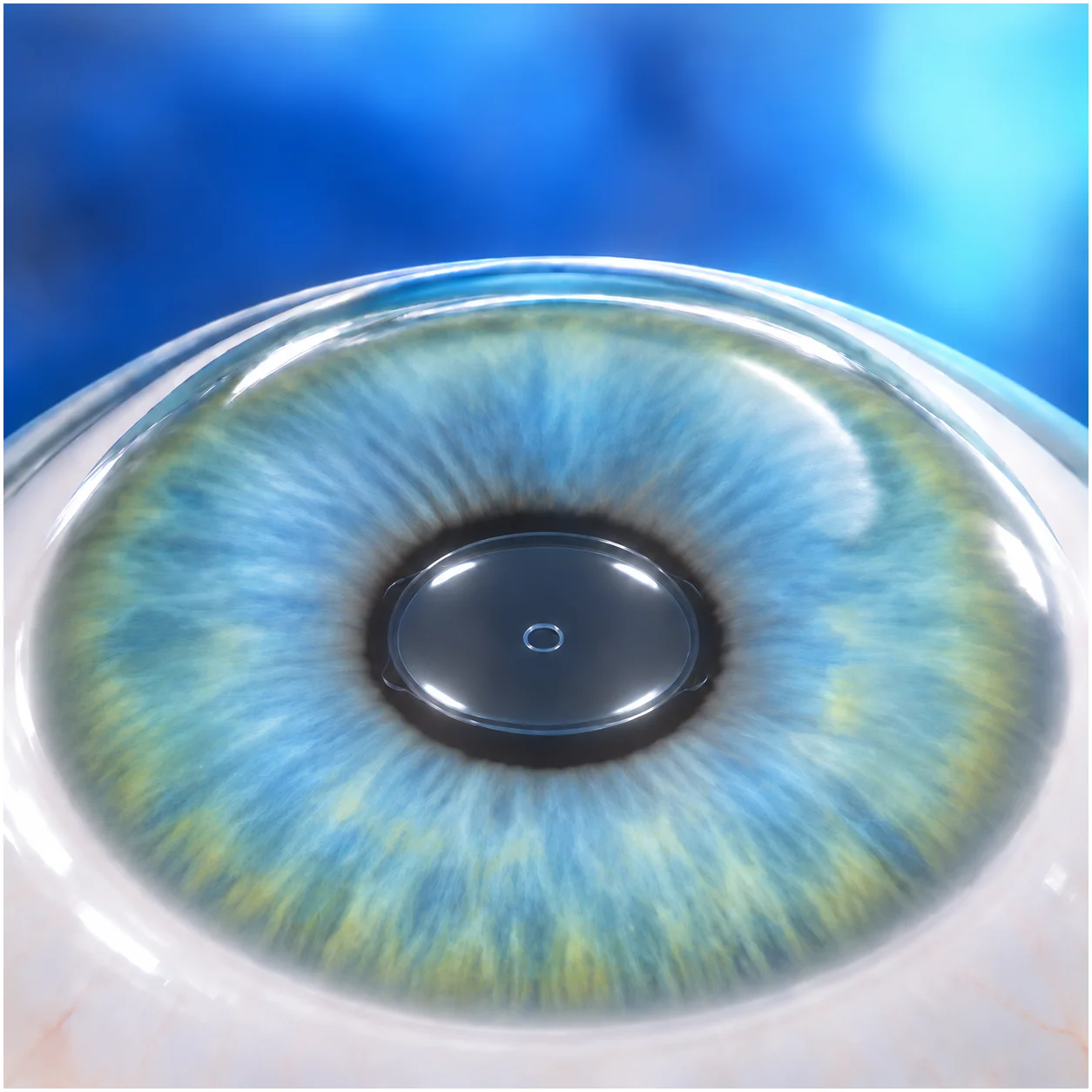
| FemtoLASIK | SMILE Pro 2.0 | SafeSight Transepithelial PRK | EVO ICL | |
|---|---|---|---|---|
| Approach | A thin corneal flap is created before the cornea is reshaped with a laser | Flapless procedure where a lenticule is removed through a small corneal incision | Flapless surface laser treatment | A lens is implanted between the iris and natural lens |
| Procedure Time (per eye) | 10 to 15 minutes | 3 to 5 minutes | 3 to 5 minutes | 15 to 20 minutes |
| Correction | Myopia, hyperopia & astigmatism | Myopia & astigmatism | Myopia, hyperopia & astigmatism | Myopia, hyperopia & astigmatism |
| Downtime | 2 to 3 days | 2 to 3 days | 5 days | 2 to 3 days |
From finding out whether EVO ICL is right for you to returning to clearer vision, we will guide you through each stage of the process. Your journey begins with a comprehensive suitability assessment, followed by personalised lens selection, your EVO ICL procedure, and structured aftercare as your eyes recover and vision settles.
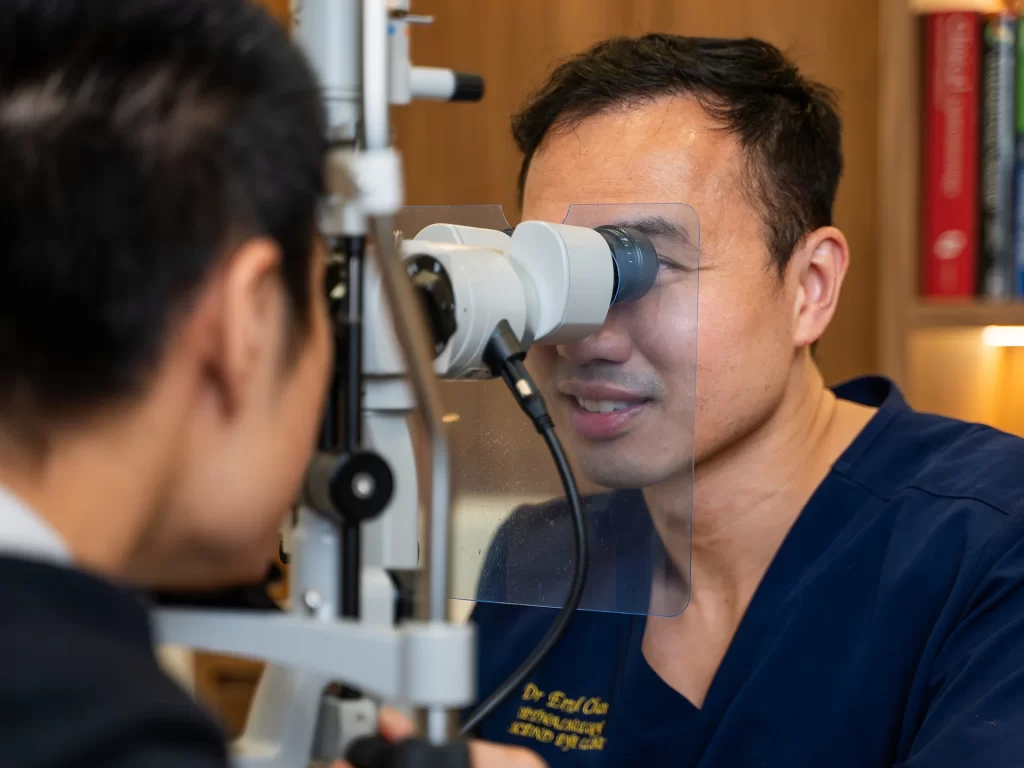
Your first step is a comprehensive assessment of your vision, prescription and eye health. Measurements of the front of the eye are taken to confirm that there is sufficient space for the EVO ICL to be safely positioned. We will also assess the health of the cornea, including the cells that line its inner surface.
To ensure these measurements are accurate, contact lenses should be stopped before your assessment:
These measurements are used to select the appropriate EVO ICL power and size for each eye. We will then review your results together with your lifestyle, visual needs and expectations, while considering the full range of vision correction options available to determine which treatment is best suited to you.
Your suitability assessment and EVO ICL surgery are performed on separate days. Once your lenses are ready, we will provide clear preparation instructions and explain your post-operative eye drops, aftercare and temporary activity restrictions. You should also arrange for someone to accompany you home, as you will not be able to drive immediately after surgery.
EVO ICL surgery is performed while you are awake using anaesthetic eye drops to keep your eyes comfortable. Your pupil is dilated before the procedure, and a small device gently keeps your eyelids open so you do not need to worry about blinking during surgery.
A small opening is created at the edge of the cornea. The folded EVO ICL is then inserted into the eye, where its soft and flexible Collamer material allows it to gently unfold.
The lens is carefully positioned behind the iris and in front of your natural crystalline lens, where it remains completely out of sight. Once the EVO ICL is correctly positioned, the procedure is complete. Both eyes can usually be treated during the same surgical session.
Your vision is usually already clearer shortly after surgery, although some blurring, haziness, glare or light sensitivity is common while the eyes begin to settle.
Your eye pressure and the position of the EVO ICL will be checked as part of your early post-operative care. You can return home after surgery, but you should not drive and should arrange for someone to accompany you home.
Prescribed eye drops should be used as directed to support healing and reduce the risk of infection and inflammation. Avoid rubbing or pressing on your eyes, and keep water, makeup and other potential irritants away from the eyes during the early recovery period.
Your first follow-up allows us to check your vision, eye pressure and the position of the EVO ICL, while ensuring that your eyes are recovering as expected.
Vision typically improves quickly over the first few days and continues to stabilise as the eyes settle. Some temporary glare, halos, light sensitivity or fluctuations in vision can occur during this period.
Further follow-up appointments allow us to monitor your visual result, eye pressure and the position of the EVO ICL over time.
Caring for Your Eyes After EVO ICL Surgery
Our team remains available throughout your recovery should you have any questions or concerns after your procedure.
Clearer vision starts with understanding which treatment is best suited to your eyes.
Book a comprehensive EVO ICL suitability assessment to evaluate your prescription, eye measurements and overall suitability for treatment, and receive a personalised recommendation based on your visual needs.
EVO ICL can be used to correct myopia (short-sightedness), hyperopia (long-sightedness) and astigmatism, depending on the lens model available. ICL technology covers a broad range of refractive errors, including higher prescriptions. The exact correction suitable for your eyes will be determined during your assessment.
Suitability is determined through a comprehensive eye assessment. We will assess your prescription, eye health and the internal dimensions of your eyes to ensure there is sufficient space for the lens and to determine the appropriate lens power and size.
EVO ICL can generally be considered for adults between 20 and 60 years old. Age alone does not determine suitability, however. We will assess your prescription, eye health, lens status and individual measurements to determine whether EVO ICL is an appropriate option for you.
Yes. ICL technology can correct a wide range of refractive errors and is particularly useful for patients with higher prescriptions.
Potentially, yes. EVO ICL corrects vision by placing an additional lens inside the eye rather than removing corneal tissue. This means patients with thinner corneas can still be considered for treatment, provided the rest of the eye is suitable.
Yes, depending on the overall health of your eyes. EVO ICL does not require corneal tissue to be removed and has minimal impact on the corneal nerves involved in the natural tear response. Studies show that EVO ICL does not induce dry eye syndrome.
Vision and prescription can fluctuate during pregnancy and breastfeeding due to hormonal changes. For this reason, elective vision correction is generally postponed until after pregnancy and breastfeeding, when your prescription and eye measurements have stabilised.
EVO ICL adds a corrective lens inside the eye rather than reshaping the cornea. No corneal tissue is removed, and the implanted lens can be surgically removed or exchanged if required. Neither approach is inherently better than the other, and we will recommend the most appropriate option based on your prescription, eye measurements, lifestyle and visual needs.
Anaesthetic eye drops are used to numb the eye and keep you comfortable during surgery. You may notice some pressure, bright lights or unusual visual sensations during the procedure, but significant pain is not expected.
The EVO ICL procedure typically takes around 20 to 30 minutes and is performed as day surgery.
Yes. Both eyes can usually be treated during the same surgical session where appropriate. Your individual treatment plan will be confirmed before surgery.
Many patients notice substantially clearer vision soon after the procedure. Vision continues to settle as the eyes recover over the following days.
Recovery is generally quick, with many patients able to return to routine daily activities within the first few days. Your vision can continue to sharpen and stabilise as the eyes settle. EVO ICL is associated with rapid visual recovery.
Many patients can return to office-based work within a few days. Your individual recovery and the nature of your work will determine when you are ready to return.
You should not drive immediately after surgery and should arrange for someone to accompany you home. Driving can be resumed once your vision has recovered sufficiently and meets the required driving standard.
Light activities can usually be resumed relatively quickly, but strenuous exercise and swimming should be avoided during the early healing period. We will advise you when you can safely return to your usual exercise and sporting activities.
Flying does not usually interfere with the implanted lens once your eyes are recovering normally. However, it is important to attend your early post-operative reviews, so let us know if you are planning to travel soon after surgery.
Eye makeup should be avoided during the early recovery period to minimise irritation and contamination around the eyes. We generally advise waiting at least one week before applying eye makeup again.
The aim of EVO ICL is to significantly reduce your dependence on glasses and contact lenses. While many patients achieve good unaided distance vision, a small residual prescription can occasionally remain. Reading glasses can also still become necessary later in life as the natural lens undergoes age-related changes such as presbyopia.
Some glare or halos can occur during the early recovery period as your eyes adjust. ICL can provide good quality vision in both daytime and nighttime conditions, although individual experiences vary.
The EVO ICL is positioned behind the iris, so it is not normally visible to you or other people. Once your eye has recovered, you should not feel the lens during normal daily activities.
EVO ICL is designed to remain inside the eye for long-term vision correction. However, it is also removable. The lens can be surgically removed or exchanged in the future if clinically required.
Your eyes can still undergo natural changes over time. Small prescription changes may not require any treatment, while more significant changes can be assessed individually. Depending on your eyes and visual needs, options can include glasses, contact lenses or further vision correction, including lens exchange where appropriate.
EVO ICL does not prevent you from having cataract surgery later in life. If cataract surgery becomes necessary, the ICL can be removed and the cloudy natural crystalline lens replaced with an intraocular lens. Importantly, EVO ICL does not involve reshaping the cornea, which avoids adding complexity to the lens power calculations used for future cataract surgery.
EVO ICL has an established safety profile, but as with any procedure performed inside the eye, there are recognised risks. These include inflammation, raised eye pressure, infection, changes in corneal endothelial cell count, cataract formation, glare or halos, changes in the position of the lens, or the need for further treatment. Your individual risks will be discussed with you as part of the suitability assessment and consent process.
Wish to book a consultation or have a question? WhatsApp Us!