


During cataract surgery, the eye’s natural cloudy lens is removed and replaced with a clear artificial lens implant. There is no single artificial lens implant that is suitable for everyone. Some patients prioritise sharp distance vision and are comfortable wearing reading glasses, while others would prefer to use glasses less often across several distances.
In this article, we explain the main lens implant options, how they differ and what to consider when choosing a lens implant to suit your lifestyle.
What Are The Main Artificial Lens Implants?
| Lens Implant | Range of Vision Covered | Glasses Independence | Glare / Halos Risk |
| Monofocal | At one distance (either far or near, but usually for far) | Low | Very low |
| Enhanced Monofocal | One distance & modest intermediate boost | Low to moderate | Very low |
| Extended Depth Of Focus (EDOF) | Distance to intermediate | Moderate to high | Low |
| Multifocal | Near, intermediate, and far | High | Low to Moderate |
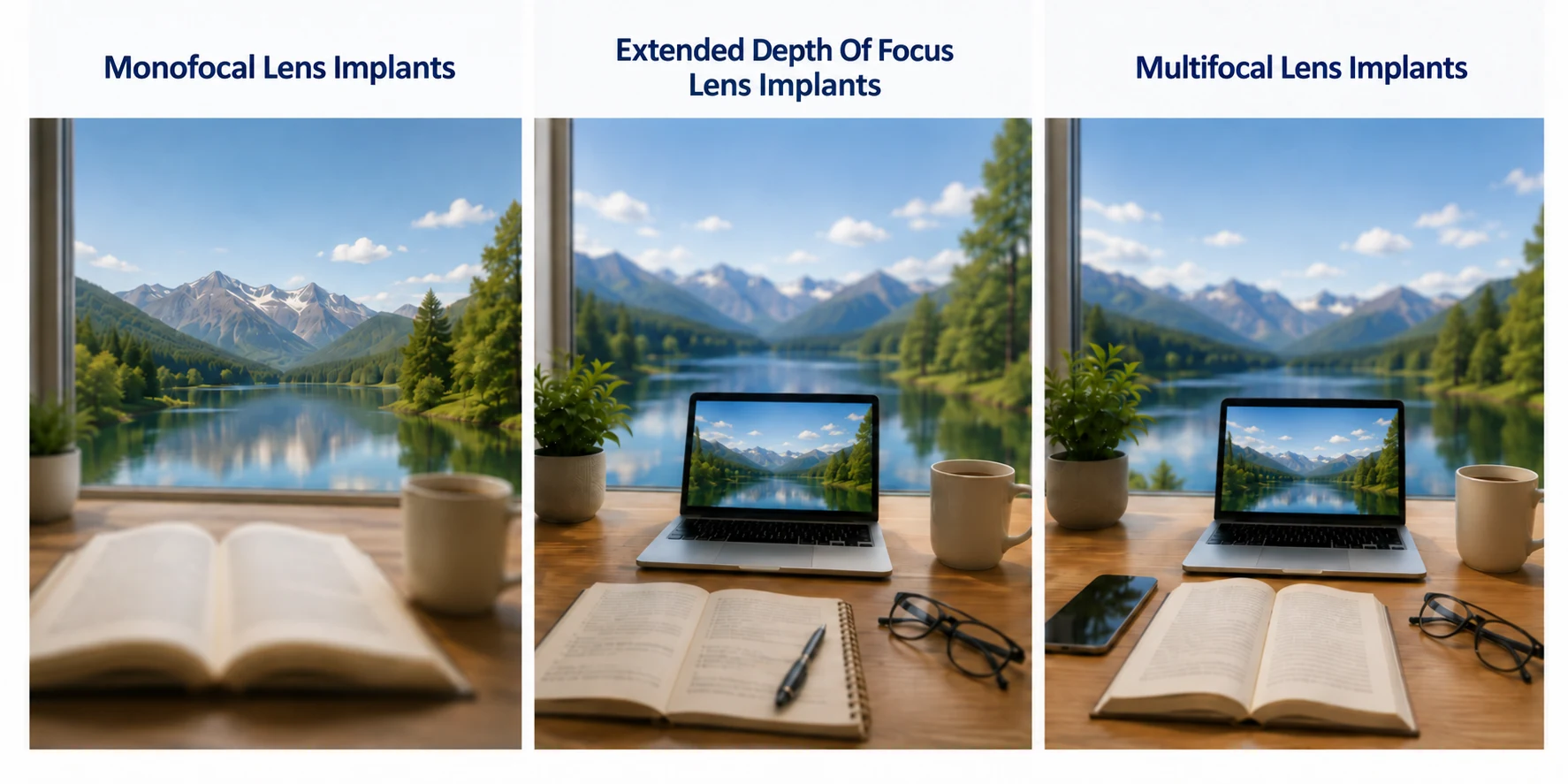
At Ascend Eye Clinic, we place a cardinal emphasis on choosing the right artificial lens implant for every individual patient. Every patient’s individual and unique eye health, conditions, work, lifestyle circumstances, and personal preferences are carefully considered to ensure that we achieve optimal vision correction.
Monofocal Lens Implant
What Are Monofocal Lens Implants?
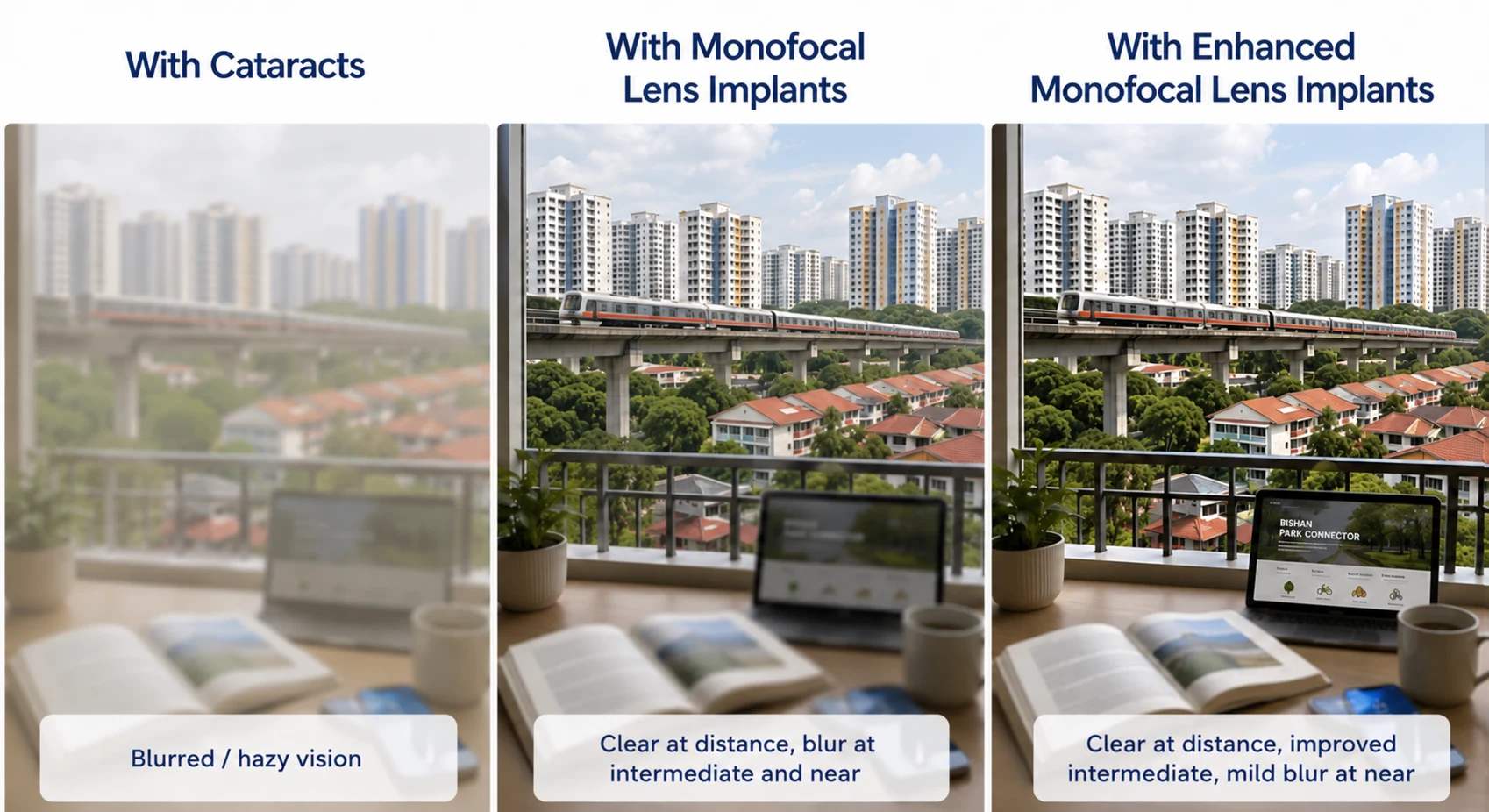
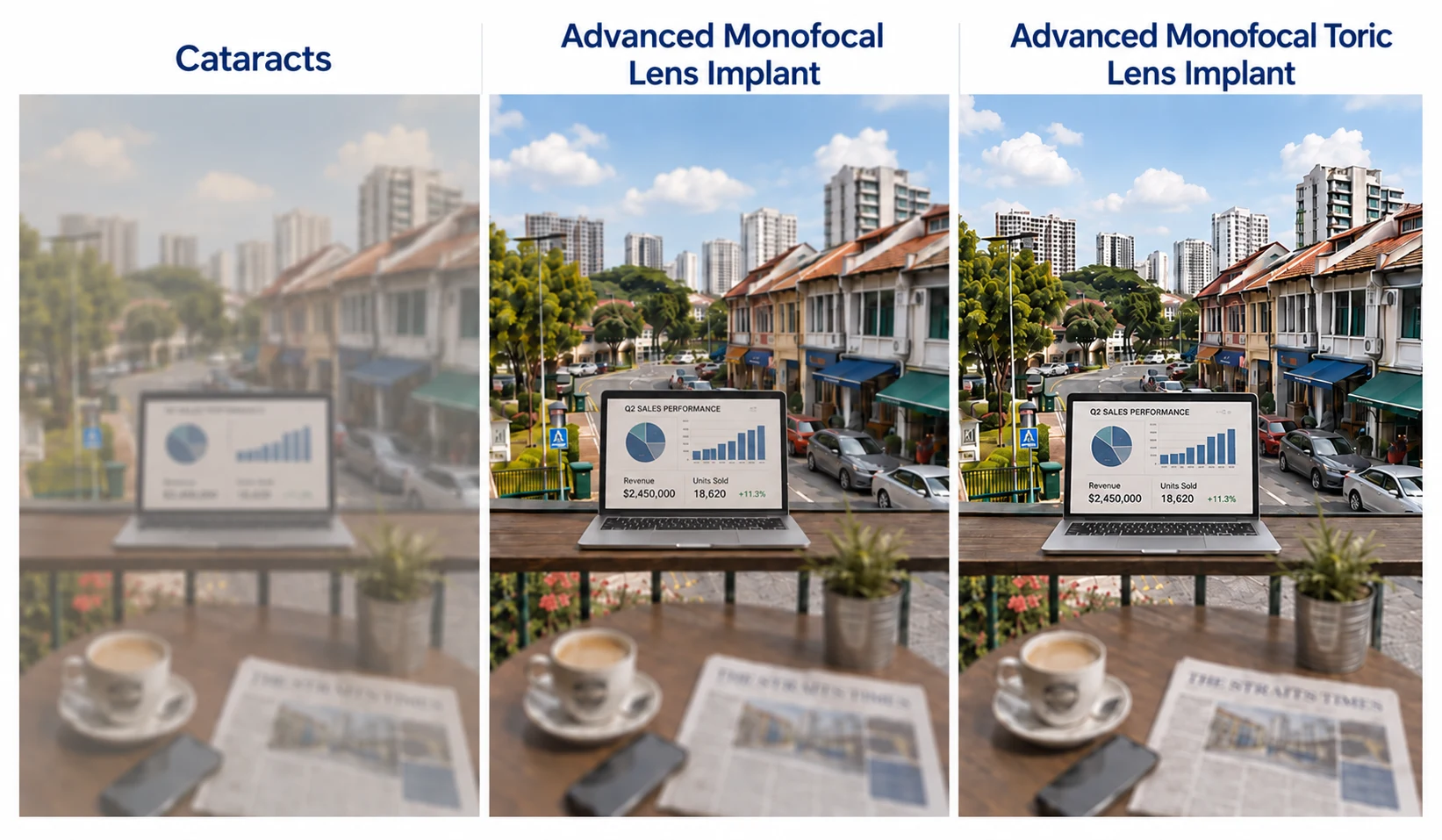
Standard monofocal lens implants give you clear, sharp vision at one distance, usually far away. As light is focused in one direction only, vision tends to be crisp and clear, with very little glare or halos at night.
If the lens implants are set for far distance, glasses will usually still be needed for near activities such as reading, phone use and computer work.
Am I A Good Candidate For Monofocal Lens Implant?
Monofocal lens implants suit you if you’re comfortable wearing glasses for near tasks, and want the clearest vision possible at one distance. Some patients also choose monovision, where one eye is set for distance and the other is set for near distance, to rely on glasses less overall. It’s also a suitable option for patients with other eye conditions, as it carries the lowest risk of visual side effects.
Enhanced Monofocal Lens Implant
What Are Enhanced Monofocal Lens Implants?
Enhanced monofocal lens implants are an upgraded version of the monofocal lens implant that is shaped to gently stretch your range of clear vision a little further. This gives a small added benefit, slightly clearer vision for everyday tasks like using a computer or checking the dashboard while driving. As your eyes only need to adjust to one zone of focus, rather than switching between several like that with multifocal lens implants, most patients adapt to enhanced monofocal lens implants quickly.
Am I A Good Candidate For Enhanced Monofocal Lens Implant?
Enhanced monofocal lens implants suit someone who prioritises distance vision and a monofocal-style visual experience but would appreciate a greater intermediate range. Reading glasses are still generally required for small print and close work.
Extended Depth of Focus (EDOF) Lens Implants
What Are EDOF Lens Implants?
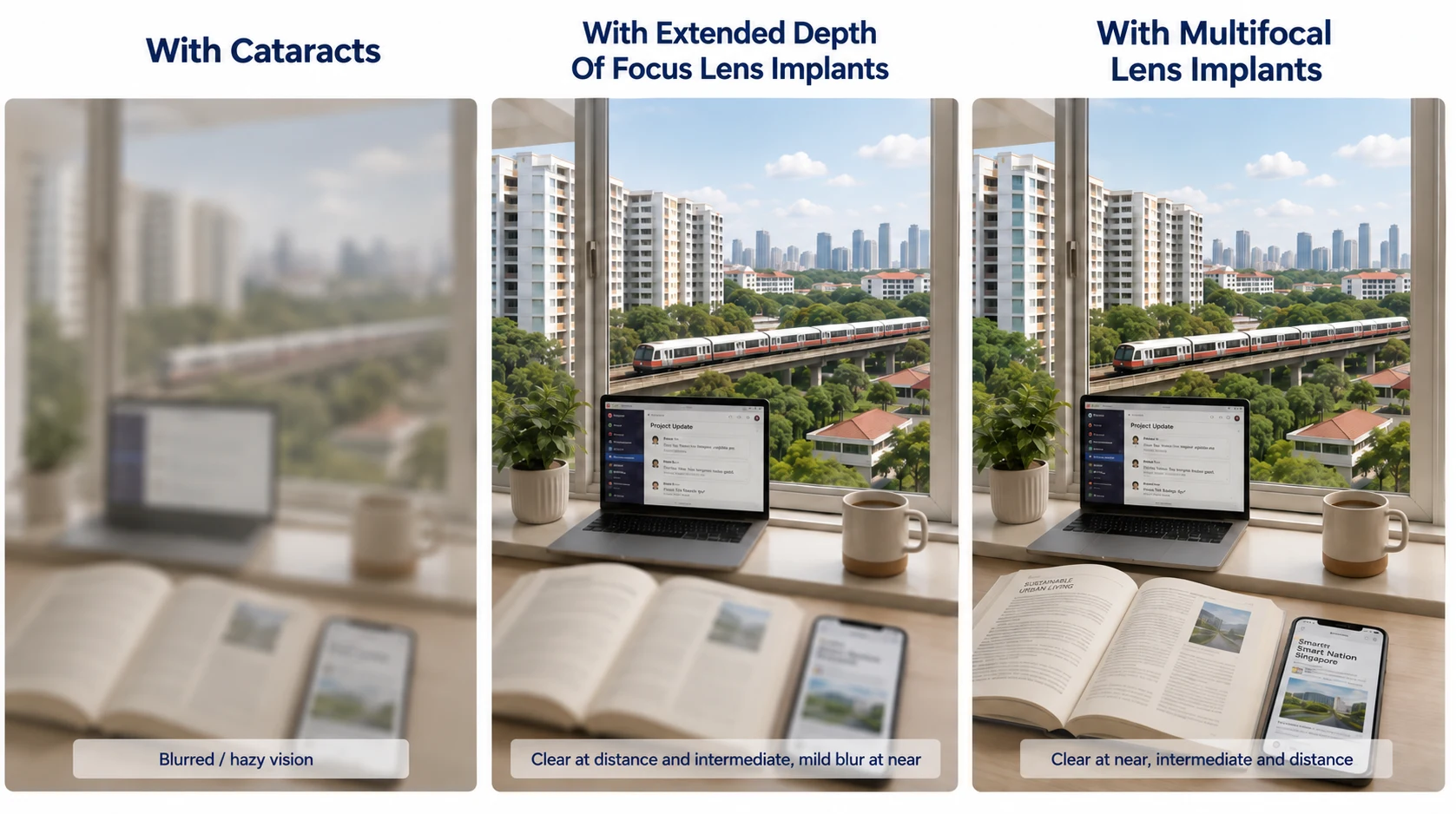
EDOF lens implants give you a continuous range of clear vision from distance through to intermediate. Instead of a single fixed point of focus, EDOF lens implants stretch your focus into one continuous zone, so your vision flows naturally between distances, like looking up from your phone to across the room.
EDOF lens implants can reduce dependence on glasses for distance and intermediate tasks. However, reading glasses may still be needed for fine print or prolonged close work. Although EDOF lens implants produce fewer night-time visual effects than some multifocal lens implants, glare or halos can still occur.
Am I A Good Candidate?
This lens implant is well-suited for you if you want strong distance and in-between vision for tasks like driving or working on a screen, without the higher risk of night time glare that comes with multifocal lens implants. You may still need glasses for reading very fine print.
Multifocal Lens Implants
What Are Multifocal Lens Implants?
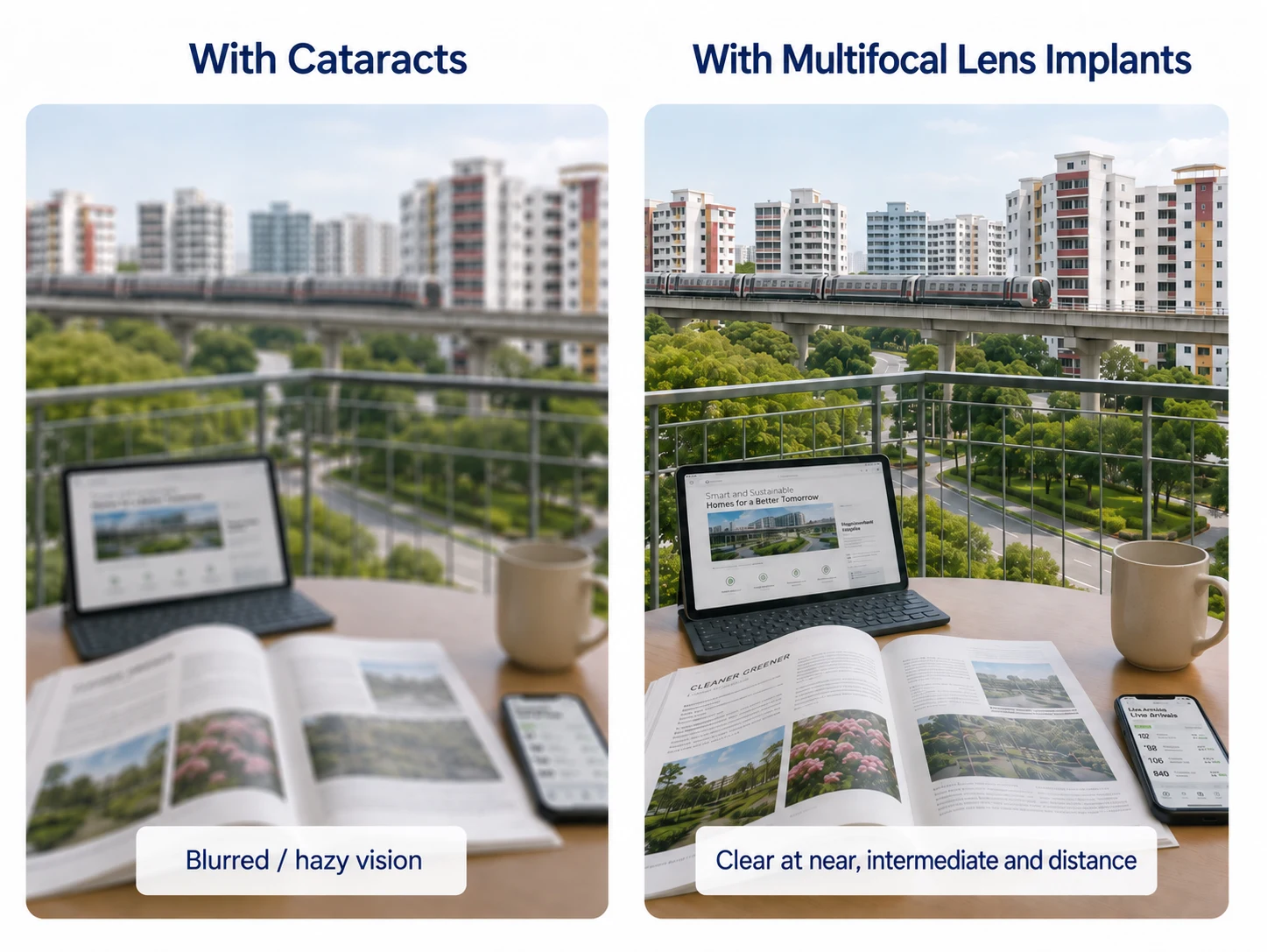
Multifocal lens implants are designed to give you clear vision at multiple distance points such as near, intermediate, and far.
In the initial weeks after surgery, it’s common to notice glare or halos around lights at night, along with some visual “busyness” as your brain adapts to the focus point needed for each task. This adjustment process, sometimes called neuroadaptation, typically improves steadily over several weeks to a few months, and most patients find that it becomes automatic with time.
Am I A Good Candidate?
This lens implant may suit you if you want the greatest freedom from glasses across all distances, and you’re comfortable with a higher chance of glare or halos, especially while driving at night. It works best for patients with generally healthy eyes, as conditions like significant astigmatism or retinal issues can affect how well you adapt to these lens implants.
Toric Lens Implants
Toric lens implants are designed to correct astigmatism. Astigmatism arises when the front of the eye has uneven curvature, which can cause blurred or distorted vision.
Toric lens implants describe astigmatism correction instead of a particular range of focus. Toric lens implants are available in monofocal, enhanced monofocal, EDOF and multifocal designs. Measurements taken before surgery help determine whether toric correction is required and how the lens implant should be aligned.
How Do I Choose The Right Lens Implant?
You can consider these questions to choose the right artificial lens implant:
- Do you drive frequently at night?
- How much time do you spend using digital devices?
- Is reading without glasses especially important to you?
- Would you accept some possibility of glare or halos to reduce your reliance on glasses?
- Do you have astigmatism or other eye conditions?
Not sure about which lens implant is right for you? Consulting an eye specialist can guide you through the benefits, trade-offs and expected visual outcomes of each option so that you can make an informed decision with confidence.