

A cataract is a common age-related eye condition that makes daily activities such as reading, driving and recognising faces challenging. If you have cataracts, you may wonder whether you are suitable for surgery. Suitability for surgery is not determined by one test result or age alone. It depends on how cataracts affect your lifestyle, eye health and whether surgery is likely to provide meaningful benefit.
In this article, we explain who may be suitable for cataract surgery, what factors to consider and how an eye specialist assesses whether it is the right step for you.
When Is Cataract Surgery Usually Considered?
Cataract surgery is considered when cataracts begin to interfere with daily activities. This includes:
- Finding it difficult to read, work or recognise faces clearly
- Experiencing glare or halos around lights
- Struggling to drive safely, particularly at night
- Difficulty driving at night
- Colours appearing dim or faded
- Blurry vision even with visual aids like glasses

“Cataract surgery should be seriously considered once blurry vision begins to interfere with daily life. Ultimately, the right time for cataract surgery depends on how the cataract affects your daily life, your eye health and your specific visual needs.”
Does A Cataract Need To Be “Ripe” Before Cataract Surgery?
Cataracts do not need to be “ripe” before they can be removed. In fact, waiting for a cataract to become advanced could make surgery more complex. Furthermore, advanced cataracts increase the risk of angle closure glaucoma by causing the lens to swell, narrowing the eye’s drainage angle and raising eye pressure.
Does Another Health Condition Make Me Unsuitable For Cataract Surgery?
Generally, no. In fact, having cataracts with another eye condition offers an opportunity to treat both eye conditions at the same time.
- Retinal conditions: In general, eye conditions such as age-related macular degeneration, diabetic retinopathy or epiretinal membrane need to be stabilised before cataract surgery, though they can be treated at the same time that cataract surgery is performed. This ensures that patients achieve good control of their condition and attain optimal improvement in their vision.
- Glaucoma: Cataract surgery can treat angle closure glaucoma, a specific form of glaucoma. By removing the cataractous lens, this increases the drainage space within the eye, slowing down the progression of angle closure. In other cases of glaucoma, cataract surgery can be performed in conjunction with glaucoma surgery to optimise the control of both conditions. Such glaucoma surgeries include minimally-invasive glaucoma surgery (MIGS), trabeculectomy or glaucoma drainage implant.
- Corneal scarring: In patients with corneal scarring, cataract surgery can be safely performed to reduce scarring.
- Previous eye surgery: If you have undergone refractive surgeries such as LASIK, transPRK or SMILE Pro 2.0 before, cataract surgery can be safely performed. It is important that the eye surgeon adopts a rigorous approach in determining the specific power of your lens implant so that you achieve your target correction and optimal vision after surgery without needing glasses.
How Do I Tell If I Need Cataract Surgery?
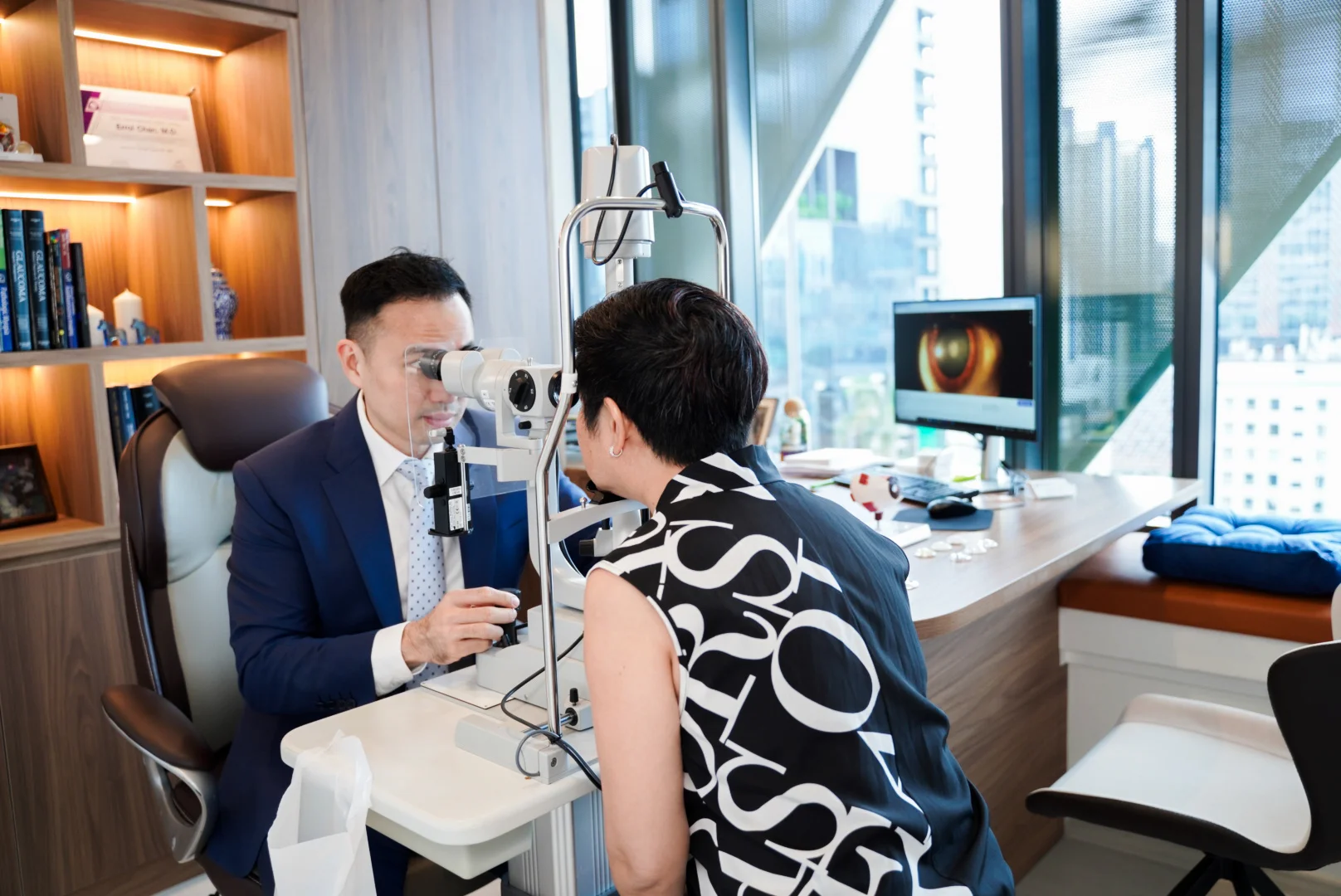
You will need to undergo a specialised cataract assessment to determine the extent to which cataracts are affecting your vision, your eligibility for cataract surgery and the improvements to your vision after customised cataract surgery. The assessment includes:
- Checking your vision and spectacle prescription
- Examining the cataract and overall health of your eye
- Assessing your retina, optic nerve and eye pressure
- Measuring the shape and length of your eye to calculate the power of the artificial lens implant
- Discussing your medical history, medication and previous eye procedures
- Understanding your work, hobbies and driving needs
“Modern cataract surgery is not simply about removing a cloudy lens. It offers an opportunity to regain clearer vision in a way that is tailored to each patient’s eye health, lifestyle and visual needs. For most patients, this means greater freedom from spectacles and a renewed sense of ease, confidence and independence.”
If cataracts are beginning to affect your daily routine or make the activities you enjoy a bit more challenging, consulting an eye specialist could help you comfortably decide on the next steps to take for your vision.